Inspire Sleep Apnea: How It Works, Cost & Results
Medically reviewed by Medical Advisory Board Last reviewed 2026-06-18
Hypoglossal nerve stimulation for obstructive sleep apnea — who qualifies, what the research shows, and what it costs
Inspire sleep apnea: how hypoglossal nerve stimulation works, who qualifies, STAR trial results showing 68% AHI reduction, Medicare coverage, and cost.
Reviewed by The Metabolic Journal Medical Advisory Board
Inspire therapy is an implantable upper airway stimulation (UAS) device that treats obstructive sleep apnea by stimulating the hypoglossal nerve, the nerve responsible for tongue and upper airway muscle movement. Rather than using continuous positive airway pressure (CPAP) to pneumatically hold the airway open, Inspire delivers a timed, mild electrical impulse with each breath during sleep, moving the tongue forward and out of the airway. Each night, the patient controls the device with a small handheld remote. No mask, no hose, no forced air.
Partner · Opt Health
Want help fixing your sleep for real?
Opt Health treats sleep as a measurable system — cortisol rhythm, thyroid, testosterone, inflammation — and works the biology behind bad sleep with a physician, not a sleep-hygiene checklist.
See Opt Health's sleep program →For patients who have failed CPAP, whether because of claustrophobia, mask discomfort, mouth breathing, aerophagia, or simple adherence failure, Inspire is the most evidence-backed surgical alternative, supported by a decade of real-world outcome data. This guide explains how it works, who qualifies, what the STAR trial and post-market data show, and how to navigate coverage. For a full comparison of all treatment options, see our sleep apnea treatments comparison.
How Inspire Works: The Hypoglossal Nerve Stimulation Mechanism
Inspire consists of three implanted components: a stimulation lead placed on the hypoglossal nerve (below the jaw), a sensing lead between two ribs that detects respiratory effort, and a small pulse generator implanted under the skin below the collarbone. The system works continuously during sleep: as the sensing lead detects each inhalation, the pulse generator triggers a mild electrical stimulation through the hypoglossal nerve, causing the tongue and upper airway muscles to tense and move anteriorly — clearing the airway obstruction that causes apnea events.
A key non-obvious point: Inspire only works for obstructive sleep apnea, where the airway physically collapses or is blocked. It does not help central sleep apnea, where the brain fails to send the signal to breathe. For OSA patients with a significant retropalatal or retroglossal obstruction (the most common anatomy), hypoglossal stimulation is directly addressing the obstruction mechanism — unlike positional therapy or oral appliances, which work more indirectly.
STAR Trial Results and Real-World Outcomes
The pivotal STAR (Stimulation Therapy for Apnea Reduction) trial, published in The New England Journal of Medicine (Strollo et al., 2014, n = 126), established the clinical foundation for Inspire. At 12 months: median AHI decreased 68% (from 29.3 to 9.0 events/hour); 66% of participants achieved a ≥50% reduction in AHI plus AHI below 20 (the primary responder definition); median Epworth Sleepiness Score improved by 5.1 points.
Five-year follow-up data (Woodson et al., Otolaryngology — Head and Neck Surgery, 2018) confirmed durability: 84% of 5-year completers maintained response. Post-market surveillance data from real-world Inspire implants (n = 2,687, Heiser et al., The Laryngoscope, 2021) showed 75% response rate — slightly lower than the RCT due to wider patient selection, but still strongly positive. Device-related adverse events were uncommon: tongue weakness (14%, typically temporary), discomfort at the stimulation lead site (9%), and infection requiring device removal (< 2%).
Who Qualifies for Inspire: Candidacy Criteria
Inspire candidacy is specific. Not every CPAP-intolerant OSA patient qualifies, and the criteria reflect the anatomy required for hypoglossal stimulation to work.
- Age: 22 or older (FDA approval)
- OSA severity: moderate to severe (AHI 15–65 events/hour); too mild doesn't meet coverage criteria; too severe (AHI > 65) may indicate anatomy less likely to respond
- BMI: less than 32 kg/m² for Medicare; most commercial insurers use ≤ 35. Higher BMI is associated with lower response rates due to increased parapharyngeal fat pad involvement.
- CPAP failure: documented inability to use CPAP adequately (most insurers require a prior CPAP trial)
- Anatomic screen (drug-induced sleep endoscopy): most Inspire programs require a DISE procedure to confirm the obstruction pattern is "concentric" (favorable) vs. "complete circumferential collapse" (unfavorable); approximately 20% of candidates are excluded at this step
- No central or predominant central apnea
The Inspire Procedure: Surgery, Recovery, and Activation
Inspire implantation is typically an outpatient surgery performed under general anesthesia, lasting 2–3 hours. Three small incisions are made: below the jaw (stimulation lead), on the upper chest/neck (sensing lead), and below the collarbone (pulse generator). Most patients go home the same day and return to normal activity within 1–2 weeks.
The device is activated 4–6 weeks after surgery to allow healing, then titrated over 1–2 months through in-office adjustments and home use. Patients use the remote to turn the device on before sleep and off on waking. Some patients also use a patient titration feature (available on the Inspire 5 system) to adjust stimulation amplitude at home within prescribed limits.
Cost and Insurance Coverage for Inspire
Inspire therapy has an estimated device cost of $30,000–$40,000 before professional fees and facility costs; total procedural costs typically run $40,000–$60,000. Insurance coverage has expanded significantly since the initial 2014 FDA approval.
Medicare: covers Inspire for patients meeting candidacy criteria under a specific NCD (National Coverage Determination) issued in 2022. Requirements include confirmed OSA (AHI 15–65), BMI ≤ 32, documented CPAP intolerance, and DISE confirmation. The procedure must be performed at an approved facility.
Commercial insurers: most major commercial plans now cover Inspire, though criteria vary slightly by payer. BCBS, Aetna, Cigna, and United Healthcare all have coverage policies; prior authorization is required universally. Patients typically owe deductible + coinsurance; for those who have met their annual deductible, out-of-pocket cost is often $2,000–$8,000.
Inspire Medical Systems offers a patient assistance program and financial counseling line: their website (inspiresleep.com) has a coverage check tool. See our sleep apnea treatments comparison for cost vs. CPAP, oral appliances, and surgical alternatives.
What to Look For in a Sleep & Recovery Tracker
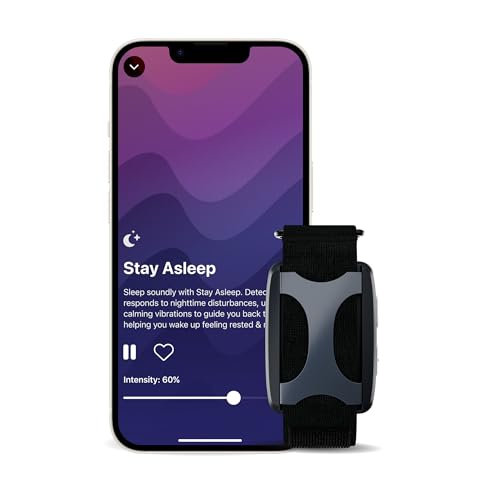
The Oura Ring and Whoop are the most accurate consumer options for sleep stages and HRV; a smartwatch (Apple Watch, Garmin) works too if you'd rather not wear a ring. Prioritize validated HRV and sleep-stage tracking over step counts, check whether it needs a subscription (Whoop does), and pick something comfortable enough to wear every night.

Frequently Asked Questions
Who is a candidate for Inspire sleep apnea treatment?
Candidates must be 22 or older with moderate-to-severe OSA (AHI 15–65), a BMI below 32 (Medicare) or 35 (most commercial insurance), documented CPAP intolerance, no predominant central sleep apnea, and favorable anatomy confirmed by a drug-induced sleep endoscopy (DISE). Approximately 75–80% of patients who complete the DISE qualify anatomically.
How effective is Inspire for sleep apnea?
The STAR trial found a 68% median AHI reduction, with 66% of participants meeting the responder definition (≥50% AHI reduction plus AHI < 20) at 12 months. Real-world post-market data show approximately 75% response rates. Five-year follow-up data confirm durable results in the majority of responders. It is the most effective non-CPAP treatment with this volume of long-term data.
Is Inspire covered by Medicare?
Yes, as of 2022. Medicare covers Inspire under a National Coverage Determination for patients with moderate-to-severe OSA (AHI 15–65), BMI ≤ 32, documented CPAP intolerance, and DISE-confirmed anatomy. The procedure must be performed at a facility with an approved multidisciplinary sleep apnea program. Prior authorization is required.
What are the risks of Inspire sleep apnea surgery?
The most common adverse event is temporary tongue weakness or soreness (14% in the STAR trial, typically resolving within months). Stimulation discomfort is common during initial titration but manageable with device adjustments. Infection requiring device removal occurred in less than 2% of STAR trial participants. The surgery itself carries standard anesthesia and procedural risks; serious complications are uncommon in experienced centers.
Topic updates
Get the weekly recovery roundup
Sleep, HRV, fatigue, burnout, cortisol rhythm, sleep apnea, overtraining, and stress physiology.
Want your sleep handled by a physician who works from your labs? See how Opt Health does it →
Check Where You Stand
Take our free health assessment to understand your metabolic, hormonal, and recovery risk factors — and get personalized recommendations.
Take the Free Assessment →Free · Takes 5 minutes · Instant results
Related Guides
-
What Is Insulin Resistance? Causes, Symptoms & How to Reverse It
What insulin resistance is, how to test for it, and how to reverse it.
-
Hyperinsulinemia
Chronically high insulin: symptoms, causes, how it differs from insulin resistance, and how to reverse it.
-
Metabolic Syndrome — Diagnosis, Risks, and Treatment
The five diagnostic criteria and what they mean for your health.
See more related guides
-
Metabolic Syndrome vs Insulin Resistance — How the Two Terms Differ
Metabolic syndrome vs insulin resistance: the mechanism-vs-diagnosis distinction, and where PCOS overlaps.
-
Insulin Resistance Symptoms: 12 Warning Signs
12 clinical warning signs, from acanthosis nigricans to post-meal fatigue.
-
Blood Sugar Crash: Why It Happens and How to Stop It
Reactive hypoglycemia: causes, symptoms, and how to stabilize glucose.
-
Glucose Spikes After Eating: Causes and What to Do
Why blood sugar spikes after eating and what to do about it.
-
Fatigue After Eating: Why Food Makes You Tired
Post-meal fatigue explained — insulin, glucose, and the gut-brain axis.
Affiliate disclosure: The Metabolic Journal is reader-supported. Some links above are affiliate or referral links and we may earn a commission at no extra cost to you. As an Amazon Associate we earn from qualifying purchases. Products are chosen on the merits; commissions never influence what we recommend. This is general information, not medical advice — talk to your clinician before acting.