Trazodone vs Ambien in the Sleep Trial That Compared Them
Medically reviewed by Dr. Michael Teplitsky, MD Last reviewed 2026-10-21
How the two prescription sleep drugs compare on guideline advice and next-day safety.
Zolpidem (Ambien) is approved for insomnia and beat trazodone for falling asleep in a head-to-head trial. Trazodone is an antidepressant used off-label, and the AASM advises against it for insomnia. CBT-I comes before both.
No, trazodone is not as strong as Ambien for falling asleep. At The Metabolic Journal, every guide we write starts from the study behind the claim, and for these two drugs one trial tested them side by side.
In that 1998 trial of 306 adults, zolpidem 10 mg (the drug in Ambien) cut the time to fall asleep more than trazodone 50 mg. By the second week, trazodone did no better than a placebo. Both drugs come second to cognitive behavioral therapy for insomnia (CBT-I), which sleep and physician guidelines name as the first treatment.
Want help fixing your sleep for real?
Opt Health treats sleep as a measurable system — cortisol rhythm, thyroid, testosterone, inflammation — and works the biology behind bad sleep with a physician, not a sleep-hygiene checklist.
See Opt Health's sleep program →Trazodone vs Ambien in Head-to-Head Sleep Data
Ambien works better than trazodone for falling asleep, based on a head-to-head trial and the guideline that reviewed both. A 2017 review of trazodone for insomnia summarizes the 1998 trial by Walsh and colleagues. Adults took trazodone 50 mg, zolpidem 10 mg or a placebo every night for 14 nights.
In week one, zolpidem shortened the time to fall asleep more than trazodone or placebo. In week two, zolpidem still worked, and trazodone's effect matched the placebo's.
The American Academy of Sleep Medicine (AASM) 2017 guideline pooled the trial data for each drug. Its panel counted about 10 minutes of faster sleep onset, or 20 minutes less time awake at night, as the smallest change that matters.
| AASM 2017 result vs placebo | Zolpidem 10 mg (Ambien) | Trazodone 50 mg |
|---|---|---|
| Faster sleep onset, self-reported | 19.6 minutes | 10.2 minutes |
| Extra total sleep, self-reported | 30 minutes | 21.8 minutes |
| Less time awake after falling asleep | 25.5 minutes (sleep lab) | 7.7 minutes (diary) |
| Guideline position | Weak recommendation for | Weak recommendation against |
The AASM judged that none of trazodone's sleep results reached a meaningful size, even though its 10.2-minute faster sleep onset sat right at the 10-minute line. In the trazodone trial, headache hit 30% of people versus 19% on placebo, and daytime sleepiness 23% versus 8%. For zolpidem, the panel judged benefits to marginally outweigh harms.
Approval and Off-Label Use
Ambien is approved for insomnia, and trazodone is approved for depression. The Ambien label covers short-term treatment of insomnia marked by trouble falling asleep. The trazodone label lists one use, major depressive disorder in adults, with a starting dose of 150 mg a day.
Doctors prescribe trazodone for sleep off-label, usually at 25 to 100 mg, per the 2017 review. That review calls it one of the most widely prescribed sleep aids in the US, despite its approval for depression only.
The AASM panel noted that many doctors see trazodone as the "safer" sleep aid. Its own review found the benefits too small to recommend it, and the harms possibly larger than the benefits. The trazodone evidence the panel had was thin: one 50 mg dose, two weeks long, measured by sleep diary.
Trazodone vs Ambien Side by Side
Ambien and trazodone split on approval, controlled-substance status and their most serious warnings.
| Criterion | Ambien (zolpidem) | Trazodone |
|---|---|---|
| Approved use | Short-term insomnia with trouble falling asleep | Major depressive disorder in adults |
| AASM 2017 insomnia advice | Weak for | Weak against |
| Typical sleep dose | 5 mg for women and older adults, 5 or 10 mg for men, 10 mg maximum | 25 to 100 mg off-label |
| Time to peak level | About 1.6 hours, slower after a meal | About 1 hour fasting, 2 hours with food |
| Half-life | About 2.5 hours | About 3 to 6 hours, per a 2017 review |
| Controlled substance | Yes, Schedule IV | No |
| Stopping suddenly | Withdrawal reported, including cramps, tremors and seizures | Discontinuation symptoms such as dizziness and nausea, taper advised |
| Main label warning | Boxed warning for sleep-walking and sleep-driving | Boxed warning for suicidal thoughts and behaviors in children and young adults, plus priapism, low blood pressure on standing and heart rhythm changes |
| Older adults | Beers Criteria say avoid | Fall injuries no lower than with benzodiazepines in one nursing-home study |
| Verdict | Better for short-term trouble falling asleep | Not a first choice for insomnia alone |
Both drugs raise fall concerns for older adults.
The American Geriatrics Society (AGS) 2023 Beers Criteria tell clinicians to avoid zolpidem and the other "Z-drugs" in older adults. The AGS panel cites delirium, falls, fractures and car crashes for little gain in sleep.
A 2018 Ontario nursing-home study found fall injuries in 5.7% of new low-dose trazodone users and 6.0% of new benzodiazepine users within 90 days. The authors concluded that low-dose trazodone was no safer than benzodiazepines for fall injuries.
The Ambien label shows the same age pattern. Among 1,959 patients in trials outside the US, 30 reported falls, and 28 of those 30 were 70 or older. The label sets 5 mg as the dose for older adults.
Dependence Risk and Next-Day Driving
Ambien carries more dependence risk, and both drugs can impair you the next morning. The Ambien label lists zolpidem as a Schedule IV controlled substance and says long-term use is not recommended. Dependence risk rises with dose and with how long you take it, and stopping suddenly can bring withdrawal.
Trazodone is not a controlled substance, and its label says abuse potential has not been studied in a systematic way. Stopping it abruptly can still cause nausea, dizziness, irritability and trouble sleeping, so the label advises a slow taper.
Next-day driving is a shared problem.
In 2013, the Food and Drug Administration (FDA) cut the starting zolpidem dose for women from 10 mg to 5 mg, because women clear the drug more slowly. The FDA warns that impairment can persist the next morning even when you feel fully awake. It says not to take a dose with less than 7 to 8 hours left for sleep.
The trazodone label warns that sedation may impair driving as well. At depression doses, drowsiness affected 41% of patients versus 20% on placebo. Do not drive after a first dose of either drug until you know how you respond to it.
Warnings Unique to Each Drug
Each drug carries a boxed warning the other does not share. Ambien's covers complex sleep behaviors.
In 2019 the FDA added a boxed warning to zolpidem, eszopiclone and zaleplon after people were seriously hurt, and some died, while sleep-walking or sleep-driving. Anyone who has done this on one of these drugs should not take them again.
Trazodone's boxed warning covers suicidal thoughts and behaviors. Antidepressants raised that risk in children and young adults in short-term studies, so the label calls for close monitoring of anyone taking trazodone for worsening mood.
Trazodone also warns of priapism, an erection that lasts for hours. The label tells men with an erection lasting more than 4 hours, painful or not, to stop the drug and get emergency care. The 2017 review puts the rate at roughly 1 in 1,000 to 1 in 10,000.
Trazodone can also prolong the QT interval on a heart tracing and drop blood pressure when you stand. The review flags that second effect for older adults who get up at night. Its label adds a bleeding risk when it is combined with aspirin, anti-inflammatory painkillers or warfarin.
Pregnancy needs a separate conversation for both drugs. The Ambien label reports breathing problems and heavy sedation in newborns exposed to zolpidem late in the third trimester. If you are pregnant or planning to be, ask your obstetric clinician before starting either one.
When Each Drug Fits
Ambien fits short-term trouble falling asleep in an adult who has 7 to 8 hours for sleep and no history of sleep-walking on a sleeping pill. The label advises taking it right before bed on an empty stomach for the fastest effect. Women and older adults start at 5 mg.
Trazodone fits a narrower case. Its approved job is treating major depression, and a clinician treating depression may weigh its sedation as part of the choice. For insomnia alone, the AASM advises against it.
Ambien's label calls for a check-up if insomnia continues after 7 to 10 days, since it may signal another medical or psychiatric condition. Our insomnia guide covers the other prescription choices the AASM reviewed.
Who Should Choose Neither
Some people should choose neither trazodone nor Ambien. The American College of Physicians (ACP) recommends CBT-I as the first treatment for chronic insomnia, meaning symptoms at least 3 nights a week for 3 months. The AASM guideline says every patient with chronic insomnia should receive CBT-I as a primary treatment.
Ask a clinician about other paths first in these cases:
- you are an older adult, given the Beers warning on zolpidem and the nursing-home fall data on trazodone
- you drink alcohol or take opioids, benzodiazepines or other sedatives, which the Ambien label says deepen central nervous system depression
- you snore loudly or wake up gasping, since ACP lists sleep apnea among the causes to rule out first
- you have a heart rhythm problem or take drugs that affect it, given trazodone's QT warning
Melatonin also adds to zolpidem's effect. A 2023 review of melatonin in older adults found that taking both worsened driving and coordination more than zolpidem alone.
What Would Change Our Answer
Our answer would change with a longer trial. The only head-to-head trazodone vs Ambien data we found covered one dose of each for two weeks, measured by sleep diary. A trial of several trazodone doses over months, with sleep-lab measures, could move trazodone up or down.
A new AASM guideline would also change the picture, since the 2017 version is the latest pharmacologic review we found. For the research behind CBT-I, see our briefing on CBT-I and biological aging, and for the over-the-counter side, see Unisom vs melatonin.
The sleep and recovery hub and our sleep apnea vs insomnia comparison cover what to rule out before any sleep drug. Bring a two-week sleep diary to your appointment, and ask whether CBT-I should come before trazodone vs Ambien.
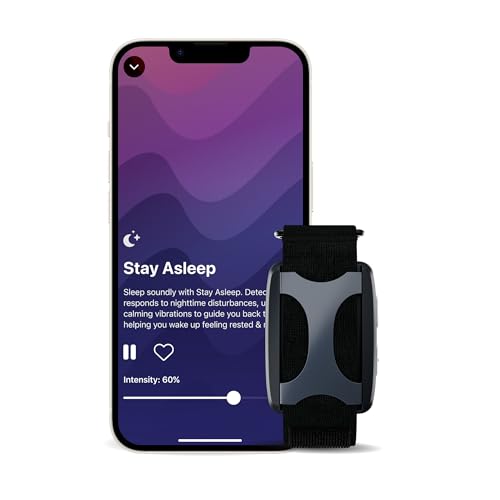
What to Look For in a Sleep & Recovery Tracker
The Oura Ring and Whoop are the most accurate consumer options for sleep stages and HRV; a smartwatch (Apple Watch, Garmin) works too if you'd rather not wear a ring. Prioritize validated HRV and sleep-stage tracking over step counts, check whether it needs a subscription (Whoop does), and pick something comfortable enough to wear every night.

What Makes a Good Magnesium Supplement
Form matters more than dose: magnesium glycinate and citrate absorb well and are gentle on the stomach, while cheap magnesium oxide is poorly absorbed. A typical supplemental dose is 200–400 mg of elemental magnesium (check the label — it's usually lower than the pill weight). Take it in the evening if you're using it for sleep, and pick a third-party-tested brand.


Frequently Asked Questions
Why is trazodone not recommended for insomnia?
The AASM found its benefits too small and its side effects possibly larger. Trazodone 50 mg shortened self-reported sleep onset by 10.2 minutes, right at the panel's 10-minute line, and added 21.8 minutes of sleep, short of its 30-minute line. The panel judged that none of the results reached a clinically significant degree.
Is trazodone better than Ambien for staying asleep?
No trial in our sources shows that. In the AASM data, zolpidem cut time awake at night by about 25 minutes, and trazodone by about 8 minutes.
Can trazodone and Ambien be taken together?
Only if one prescriber plans the combination. The Ambien label warns that other central nervous system depressants raise the risk of oversedation and may need dose changes, and the trazodone label warns of sedation on its own.
Is trazodone or Ambien safer?
Neither is clearly safer. Ambien carries dependence risk and a boxed warning for sleep-driving, while trazodone carries priapism, heart rhythm and blood pressure warnings. In older adults, the nursing-home study found trazodone no safer than benzodiazepines for falls.
What other sleep medicines does the AASM suggest?
The AASM 2017 guideline weakly supports eight prescription drugs for insomnia. Zaleplon, triazolam and ramelteon were suggested for falling asleep, doxepin and suvorexant for staying asleep, and zolpidem, eszopiclone and temazepam for both. The same guideline suggests against trazodone, diphenhydramine and melatonin.
Is trazodone and Ambien the same thing?
No. Ambien contains zolpidem, a sleeping pill approved for insomnia. Trazodone is an antidepressant approved for major depression and used off-label for sleep.
Is trazodone addictive like Ambien?
Trazodone is not a controlled substance, while zolpidem is Schedule IV. The trazodone label says its abuse potential has not been studied in a systematic way, and stopping it suddenly can cause discontinuation symptoms.
Topic updates
Get the weekly recovery roundup
Sleep, HRV, fatigue, burnout, cortisol rhythm, sleep apnea, overtraining, and stress physiology.
Want your sleep handled by a physician who works from your labs? See how Opt Health does it →
Check Where You Stand
Take our free health assessment to understand your metabolic, hormonal, and recovery risk factors — and get personalized recommendations.
Take the Free Assessment →Free · Takes 5 minutes · Instant results
Related Comparisons
-
Low Heart Rate (Bradycardia): Thresholds, When It Is Normal, Red Flags for 911, Causes, Tests and Pacemakers
Low heart rate (bradycardia): thresholds, when it is normal, red flags for 911, causes, tests and pacemakers.
-
Sleep Apnea, Fatigue, Weight Gain, and Metabolic Risk
Connect sleep apnea to fatigue, weight gain, testing, and treatment options.
-
Chronic Fatigue: Causes Beyond Just Sleep
Causes of persistent fatigue beyond sleep — iron, thyroid, inflammation.
See more related comparisons
-
Sleep Apnea Symptoms: Signs You're Not Breathing at Night
OSA warning signs: snoring, witnessed apneas, daytime sleepiness.
-
Sleep Apnea in Children
Pediatric sleep apnea symptoms by age, from infant breathing pauses to school-age hyperactivity.
-
Waking Up Tired Every Day? Here's Why
Why 7-8 hours isn't enough when sleep quality is poor.
-
Sleep Inertia: Why You Feel Groggy When You Wake Up
Morning grogginess — circadian, cortisol, and sleep-stage causes.
-
Afternoon Energy Crash: Causes and How to Prevent It
The 2-4 PM slump: blood sugar, cortisol, and circadian factors.
Affiliate disclosure: The Metabolic Journal is reader-supported. Some links above are affiliate or referral links and we may earn a commission at no extra cost to you. As an Amazon Associate we earn from qualifying purchases. Products are chosen on the merits; commissions never influence what we recommend. This is general information, not medical advice — talk to your clinician before acting.