Sleep Inertia: Why You Feel Groggy in the Morning
Medically reviewed by Medical Advisory Board Last reviewed 2026-09-15
The science of morning grogginess — and when it signals a deeper problem
Sleep inertia — the heavy grogginess and impaired cognition lasting 15–60 minutes after waking — is normal in mild form. But severe or prolonged sleep inertia may indicate circadian misalignment, sleep debt, or disrupted sleep architecture.
Sleep inertia is the transition between sleep and full wakefulness. It's marked by grogginess, disorientation, impaired decision-making, and a strong desire to go back to sleep. Research from Brigham and Women's Hospital shows that cognitive performance during severe sleep inertia can be worse than it is after 24 hours of total sleep deprivation.
Mild sleep inertia that lasts 15 to 30 minutes is physiologically normal. The prefrontal cortex, which is responsible for executive function, takes longer to "come online" than the brainstem arousal centers. However, severe grogginess lasting 60+ minutes, difficulty getting out of bed despite adequate sleep, or persistent morning confusion may indicate an underlying sleep disorder, circadian rhythm issue, or hormonal dysfunction.
Partner · Opt Health
Want help fixing your sleep for real?
Opt Health treats sleep as a measurable system — cortisol rhythm, thyroid, testosterone, inflammation — and works the biology behind bad sleep with a physician, not a sleep-hygiene checklist.
See Opt Health's sleep program →Normal Sleep Inertia vs. a Red Flag: How to Tell the Difference
Use one rule to assess your morning grogginess: how long it takes to clear after a full night's sleep. Normal sleep inertia fully resolves within 15 to 30 minutes of waking, even without caffeine. If you're still impaired by grogginess 60+ minutes after waking despite getting 7 to 9 hours of sleep on a consistent schedule, treat it as a clinical signal, not a personality quirk.
Use these specific criteria to determine whether further investigation is needed:
- Duration: Impairment past 60 minutes on most days, not just after a short night.
- Sleep amount: It happens even after 7–9 hours in bed, so it is not simple sleep restriction.
- Consistency: Your wake time barely varies, so circadian misalignment is unlikely to explain it.
- Companions: Loud snoring, witnessed breathing pauses, or unrefreshing sleep point toward sleep apnea.
- Timing of mood: Grogginess paired with low mood that lifts by midday can reflect depression rather than sleep mechanics.
If three or more apply, talk to your clinician about getting a sleep study and a morning cortisol check. Severe, prolonged inertia is a recognized feature of sleep apnea, idiopathic hypersomnia, and delayed sleep phase disorder.
The Adenosine Mechanism: Why Naps and Snoozing Backfire
Adenosine is the brain chemical that builds sleep pressure, and its slow clearance is what drives morning grogginess. It accumulates while you're awake and binds to receptors that make you feel tired. Deep sleep clears most of it, but those receptors don't switch off the moment you wake up, so the brain remains partly "braked" during inertia.
This mechanism explains two common mistakes. First, hitting snooze starts a fresh, short sleep cycle that your alarm then interrupts, re-triggering inertia from a new sleep onset. You wake groggier than if you had risen with the first alarm. Second, a long afternoon nap lets you fall into deep sleep, so you wake with rebound inertia instead of refreshment.
Two practical rules follow directly from this. First, get up with the first alarm and find bright light quickly; this raises cortisol and speeds adenosine receptor reset. Second, if you nap, limit it to 10 to 20 minutes. That keeps you in light sleep and helps you avoid waking during slow-wave sleep. Both steps work with your adenosine physiology rather than against it.
What Causes Sleep Inertia
Waking from deep sleep (N3): Arousal from slow-wave sleep produces the most severe inertia. This happens more often with irregular sleep schedules, sleep deprivation (which increases deep sleep rebound), and alarm clocks that interrupt mid-cycle.
Circadian misalignment: Waking before your biological circadian nadir (the lowest point of alertness, typically 4–6 AM) or having a delayed chronotype forced to wake early produces prolonged inertia.
Sleep debt: Cumulative sleep restriction amplifies sleep inertia severity. A 2019 study in PNAS showed that even modest sleep restriction (6 hours for 10 nights) significantly increased morning grogginess.
Low morning cortisol: The cortisol awakening response (CAR) — a 50–75% rise in cortisol within 30–45 minutes of waking — drives alertness. A blunted CAR (from adrenal fatigue, chronic stress, or HPA axis dysfunction) produces severe morning inertia.
How to Reduce Morning Grogginess
- Consistent wake time: The single most effective strategy. Waking at the same time (±30 minutes) daily — including weekends — synchronizes your circadian clock.
- Morning light exposure: 10–15 minutes of bright light (>10,000 lux) within 30 minutes of waking accelerates cortisol rise and suppresses residual melatonin.
- Sleep-cycle-aligned alarm: Use a smart alarm (or the 90-minute rule) to wake during lighter sleep stages rather than deep sleep.
- Strategic caffeine timing: Delay caffeine 60–90 minutes after waking to avoid blocking the natural cortisol peak, then use it as the adenosine drive begins to build.
- Cold exposure: A brief cold shower or cold water on the face triggers norepinephrine release, rapidly increasing alertness.
Sleep Inertia vs. Sleep Apnea-Driven Grogginess
These two get confused because both produce morning grogginess, but the underlying mechanism — and the fix — is different. Ordinary sleep inertia is a brief handoff problem: the prefrontal cortex lags behind the brainstem's arousal signal for 15–30 minutes, even after a genuinely restorative night. Sleep apnea-driven grogginess is a sleep-quality problem: repeated airway obstructions fragment deep and REM sleep dozens of times a night, so you never banked the restorative sleep in the first place — the grogginess isn't a slow handoff, it's the bill for sleep that didn't actually happen.
The practical test is duration and company. Inertia clears within roughly 30 minutes even on a bad night; apnea-driven grogginess routinely drags past 60–90 minutes and often persists despite what looks like adequate time in bed. Apnea-driven grogginess also travels with its own tells — loud snoring, a partner-witnessed breathing pause, morning headache, or a dry mouth on waking — that ordinary sleep inertia doesn't produce. Because the fixes don't overlap (a consistent wake time and morning light do very little for airway obstruction, and a home sleep test does very little for an isolated 20-minute handoff), sorting out which one you actually have is the first step, not an afterthought — see sleep apnea treatment options and sleep apnea vs. insomnia for the fuller differential when snoring or witnessed pauses are part of the picture.
Sleep Inertia vs. Confusional Arousals ("Sleep Drunkenness")
Confusional arousals, sometimes called sleep drunkenness, are a distinct parasomnia, not just severe sleep inertia. During a confusional arousal, a person can sit up, talk, or even walk around while still partially asleep, with no memory of it afterward. Ordinary sleep inertia never includes this kind of automatic behavior; the person is awake and aware, just slow to reach full alertness.
Confusional arousals happen when the brain gets stuck partway between deep sleep and waking, most often triggered by forced awakening during slow-wave sleep, sleep deprivation, or certain medications. They typically last 5-15 minutes and resolve completely, but repeated episodes, especially with sleepwalking or agitation, warrant a sleep study to rule out other parasomnias or sleep-disordered breathing driving the fragmented sleep.
The practical difference is who notices it. Sleep inertia is something you experience and remember as grogginess. A confusional arousal is something a bed partner witnesses, and you often do not remember it at all.
When It's Not Sleep Inertia at All: Idiopathic Hypersomnia and Narcolepsy
Sleep inertia normally clears within 15 to 30 minutes. If grogginess drags past an hour most mornings, involves an overwhelming urge to fall back asleep rather than just feeling foggy, and shows up even after 8 or more hours of unbroken sleep, the more likely explanation is idiopathic hypersomnia or narcolepsy, not ordinary sleep inertia. Both are distinct sleep disorders with their own diagnostic criteria, confirmed through an overnight sleep study followed by a multiple sleep latency test, and both respond to specific medications that a general morning routine will not fix. The practical dividing line is duration and severity: a rough morning that resolves with coffee and a shower is sleep inertia, and a grogginess that dominates your whole morning and repeats daily regardless of sleep duration is worth raising with a sleep specialist.
Social Jetlag and Monday Morning Sleep Inertia
Monday morning grogginess often peaks because weekend schedule changes shift your internal biological clock in a pattern known as social jetlag. Sleep researcher Till Roenneberg coined the term to describe this schedule mismatch. Shifting bedtime and wake time later alters your internal timing much like crossing time zones without travel.
Waking up much later on Sunday resets your circadian phase to expect a delayed morning. When your alarm rings at the standard weekday hour on Monday, your body is forced awake during an internal window of low alertness. That timing conflict magnifies sleep inertia so morning grogginess feels substantially worse.
Catching up on missed sleep carries hidden costs. A published study on weekend catch-up sleep evaluated this dynamic in adolescents. Researchers found that weekend catch-up sleep extending more than 120 minutes beyond weekday duration was associated with significantly lower subjective well-being compared to shorter extensions.
Sleep researchers generally identify a threshold effect around roughly one hour of drift. Shifting weekend sleep and wake times by about 30 to 60 minutes produces comparatively minor circadian disruption that tends to resolve within a day. Shifts of two hours or more produce a full jet-lag pattern that reliably disrupts your Monday routine.
Do not treat this one-hour threshold as an inflexible rule for every person. Individual sensitivity varies, but staying near that benchmark helps you avoid severe post-waking grogginess. If you need to manage built-up fatigue, combining a modest wake-time buffer with strategies from our recovery guide protects your internal clock.
Why Alarm Timing Relative to Sleep Stage Matters More Than Total Sleep Time
Waking during deep slow-wave sleep produces markedly worse sleep inertia (grogginess, disorientation, and slowed reaction time) than waking during light sleep, even when total sleep duration is identical. Natural waking near cycle completion produces milder symptoms. Someone who sleeps a normal duration but wakes mid-deep-sleep can experience worse morning grogginess than someone who slept less but woke during a lighter stage.
Sleep progresses in repeating cycles throughout the night. Each cycle lasts roughly 90 minutes, moving through lighter stages, deep slow-wave sleep, and rapid eye movement (REM) sleep. Standard alarms ring at fixed clock times regardless of sleep stage.
Sleep stage transitions provide the physiological basis for smart alarm features on wearable devices. Wearables monitor sleep stages to sound the alarm during a lighter phase within a target window. Waking in a lighter window prevents abrupt deep-sleep interruptions and limits morning disorientation.
What to Look For in a Sleep & Recovery Tracker
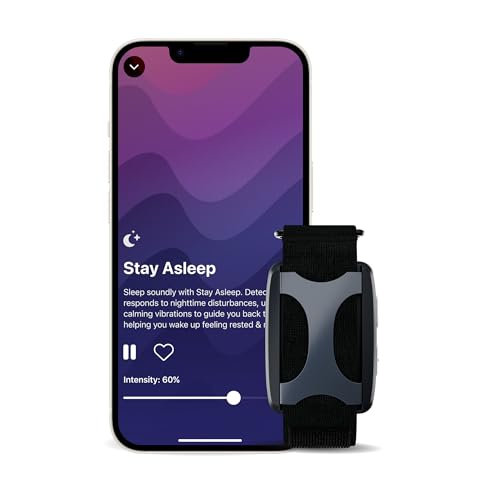
The Oura Ring and Whoop are the most accurate consumer options for sleep stages and HRV; a smartwatch (Apple Watch, Garmin) works too if you'd rather not wear a ring. Prioritize validated HRV and sleep-stage tracking over step counts, check whether it needs a subscription (Whoop does), and pick something comfortable enough to wear every night.

What Makes a Good Magnesium Supplement
Form matters more than dose: magnesium glycinate and citrate absorb well and are gentle on the stomach, while cheap magnesium oxide is poorly absorbed. A typical supplemental dose is 200–400 mg of elemental magnesium (check the label — it's usually lower than the pill weight). Take it in the evening if you're using it for sleep, and pick a third-party-tested brand.


Frequently Asked Questions
How long does sleep inertia normally last?
Typical sleep inertia lasts 15–30 minutes in well-rested individuals. Cognitive impairment peaks in the first 5–10 minutes after waking and gradually resolves. If grogginess consistently lasts 60+ minutes, investigate circadian misalignment, sleep disorders, or cortisol dysfunction.
Is sleep inertia a sign of a sleep disorder?
Not always — mild morning grogginess is normal. However, severe or prolonged sleep inertia (>60 minutes) can be a symptom of sleep apnea, idiopathic hypersomnia, delayed sleep phase disorder, or depression. If it significantly impairs your morning function despite consistent 7–9 hours of sleep, evaluation is warranted.
Does hitting snooze make sleep inertia worse?
Yes. Hitting snooze allows you to drift back into light sleep or the beginning of a new sleep cycle. When the alarm goes off again 9 minutes later, you're waking from a fresh sleep onset — restarting the inertia process. This can double or triple the grogginess duration.
Does caffeine before bed cause worse sleep inertia the next morning?
Indirectly, yes. Caffeine has a half-life of roughly 5-6 hours, so a late-afternoon or evening dose can still be partially active at bedtime, delaying sleep onset and reducing the proportion of slow-wave (N3) sleep you get overall. Since sleep debt and disrupted sleep architecture are two of the main drivers of severe sleep inertia described above, evening caffeine's real effect on next-morning grogginess is usually through those two pathways rather than any direct action on the adenosine-clearing process itself. Cutting off caffeine 8-10 hours before your target bedtime, rather than the more commonly cited 6 hours, gives most people a meaningfully clearer next-morning wake-up.
How can I tell my morning grogginess is sleep apnea and not just sleep inertia?
Look at duration and company, not just how bad it feels. Sleep inertia fades within about 30 minutes even after a rough night; apnea-driven grogginess typically lasts 60+ minutes and shows up alongside loud snoring, witnessed breathing pauses, morning headache, or a dry mouth on waking. If those companion signs are present, a home sleep test is the right next step rather than more sleep-hygiene tweaks.
What is confusional arousal (sleep drunkenness) and how is it different from sleep inertia?
Confusional arousal, or sleep drunkenness, is a parasomnia where a person appears to wake up but remains partly asleep, sometimes talking or moving with no memory afterward. Ordinary sleep inertia does not involve this kind of automatic, unremembered behavior. If a bed partner has witnessed episodes like this, mention it to a doctor, since it is evaluated differently than everyday morning grogginess.
Can certain medications worsen sleep inertia?
Yes. Sedative-hypnotics, especially longer-acting benzodiazepines and some sleep aids, can leave measurable drug levels in the system after waking, producing grogginess that mimics or worsens sleep inertia. Certain antihistamines and some blood pressure medications taken at night have a similar effect. If morning grogginess started or worsened after a new prescription, mention the timing to the prescriber.
Is sleep inertia the same as sleep paralysis?
No, sleep inertia and sleep paralysis are distinct conditions with different mechanisms, even though both occur around the sleep-wake transition. With sleep inertia, the prefrontal cortex lags behind waking, producing mental grogginess, slowed thinking, and a desire to sleep while voluntary movement remains normal once you try. Sleep paralysis occurs when rapid eye movement (REM) muscle atonia persists after waking — you wake up aware but physically unable to speak or move for seconds up to two minutes, often alongside vivid hallucinations. These episodes link more to sleep deprivation, irregular schedules, and narcolepsy than everyday sleep inertia, so frequent or distressing occurrences warrant an evaluation with a sleep specialist.
Topic updates
Get the weekly recovery roundup
Sleep, HRV, fatigue, burnout, cortisol rhythm, sleep apnea, overtraining, and stress physiology.
Want your sleep handled by a physician who works from your labs? See how Opt Health does it →
Check Where You Stand
Take our free health assessment to understand your metabolic, hormonal, and recovery risk factors — and get personalized recommendations.
Take the Free Assessment →Free · Takes 5 minutes · Instant results
Related Reading
-
Sleep Apnea Symptoms: Signs You're Not Breathing at Night
OSA warning signs: snoring, witnessed apneas, daytime sleepiness.
-
Sleep Apnea in Children
Pediatric sleep apnea symptoms by age, from infant breathing pauses to school-age hyperactivity.
-
Sleep Apnea, Fatigue, Weight Gain, and Metabolic Risk
Connect sleep apnea to fatigue, weight gain, testing, and treatment options.
See more related reading
-
Poor Sleep Quality: Root Causes and Evidence-based Fixes
Root causes and evidence-based fixes beyond sleep hygiene.
-
Cortisol and Sleep: How Stress Hormones Wreck Your Rest
The cortisol-melatonin axis and 'wired but tired' patterns.
-
How Much Deep Sleep Do You Need? N3 Sleep, Trackers, and Recovery Targets
Deep sleep targets, tracker limits, and how to improve N3 sleep.
-
Is 6 Hours of Sleep Enough? Health Risks, Exceptions, and How to Recover
Why six hours is usually not enough sleep and what to do if it is your current reality.
-
Sleep Apnea Treatment Options Compared
CPAP, oral appliances, positional therapy, surgery — compared.
Affiliate disclosure: The Metabolic Journal is reader-supported. Some links above are affiliate or referral links and we may earn a commission at no extra cost to you. As an Amazon Associate we earn from qualifying purchases. Products are chosen on the merits; commissions never influence what we recommend. This is general information, not medical advice — talk to your clinician before acting.