Upper Airway Resistance Syndrome: Hidden Sleep Disorder
Medically reviewed by Medical Advisory Board Last reviewed 2026-09-09
When you don't have sleep apnea but still can't get restorative sleep
Upper airway resistance syndrome (UARS) causes sleep fragmentation and daytime fatigue without the classic apneas or oxygen desaturations seen in OSA. It is frequently missed by home sleep tests and even some lab studies.
Upper airway resistance syndrome (UARS) falls on the sleep-disordered breathing spectrum between simple snoring and obstructive sleep apnea. With UARS, the airway narrows enough to increase breathing effort and trigger micro-arousals, brief cortical awakenings lasting 3 to 15 seconds, but not enough to cause the full apneas (breathing pauses of 10+ seconds) or significant oxygen desaturations measured by standard sleep apnea tests.
The result is profoundly disrupted sleep architecture despite near-normal AHI (apnea-hypopnea index) and oxygen saturation numbers. Patients experience unexplained fatigue, insomnia, brain fog, and often psychiatric symptoms (anxiety, depression), yet are told their sleep study is "normal."
Partner · Opt Health
Want help fixing your sleep for real?
Opt Health treats sleep as a measurable system — cortisol rhythm, thyroid, testosterone, inflammation — and works the biology behind bad sleep with a physician, not a sleep-hygiene checklist.
See Opt Health's sleep program →First described by Stanford's Dr. Christian Guilleminault in 1993, UARS remains underdiagnosed because standard home sleep tests don't measure respiratory effort-related arousals (RERAs), the primary pathological event in UARS.
UARS vs. Obstructive Sleep Apnea
| Feature | UARS | OSA |
|---|---|---|
| AHI | <5 events/hour | ≥5 events/hour |
| Oxygen desaturation | Minimal or absent | Frequent (>3–4% drops) |
| Primary event | RERAs (respiratory effort-related arousals) | Apneas and hypopneas |
| BMI | Often normal | Often elevated |
| Gender | Equal or female predominance | Male predominance (2–3:1) |
| Typical symptoms | Fatigue, insomnia, anxiety, brain fog | Snoring, daytime sleepiness, witnessed apneas |
| Blood pressure | Often low-normal | Often elevated |
Is UARS a Variant of Sleep Apnea? Comorbidities and Diagnostic Coding
Upper airway resistance syndrome (UARS) and obstructive sleep apnea (OSA) sit on the same sleep-disordered-breathing spectrum, but their diagnostic criteria differ. Some sleep physicians classify UARS as a mild form of OSA in clinical practice. Others treat it as a separate diagnosis because UARS is driven by respiratory effort-related arousals (RERAs) while the apnea-hypopnea index (AHI) remains below 5 events per hour. This variation explains why UARS and mild OSA are sometimes used interchangeably in medical records and search results.
The respiratory disturbance index (RDI) helps capture the distinction. RDI combines the AHI with RERAs, so it measures breathing disruptions that AHI alone can miss. A person with UARS can therefore have a normal AHI but an elevated RDI because repeated increases in breathing effort cause arousals without meeting the criteria for apneas or hypopneas.
Several conditions have also been reported alongside UARS:
- Postural orthostatic tachycardia syndrome (POTS) and other autonomic disorders: UARS appears alongside autonomic nervous system dysregulation in some patients. The overlap does not establish that either condition causes the other.
- Attention-deficit/hyperactivity disorder (ADHD)-like symptoms: Attention and concentration difficulties can occur in children and adults with sleep-disordered breathing. These symptoms may resemble ADHD, although the association does not make the diagnoses equivalent.
- Fibromyalgia: Clinical literature reports overlap between fibromyalgia and UARS. Current associations do not establish a direct causal relationship.
- Ehlers-Danlos syndrome: Ehlers-Danlos syndrome is a connective-tissue disorder. Tissue laxity can contribute to a narrower, more collapsible upper airway, which may help explain why UARS and Ehlers-Danlos syndrome sometimes occur together.
UARS does not have a dedicated International Classification of Diseases, Tenth Revision (ICD-10) code. In practice, clinicians commonly code it within the G47.3x sleep apnea range because UARS belongs to the broader sleep-disordered-breathing spectrum. That administrative placement does not mean UARS and OSA are clinically identical.
Symptoms of UARS
- Chronic fatigue and unrefreshing sleep despite adequate sleep duration
- Difficulty falling asleep or maintaining sleep (paradoxical insomnia presentation)
- Brain fog, difficulty concentrating, and working memory impairment
- Anxiety and/or depression — often the presenting complaint
- Cold hands and feet (autonomic dysregulation)
- Low blood pressure and orthostatic intolerance
- Irritable bowel symptoms (IBS-like)
- Headaches, especially in the morning or upon waking
- Teeth grinding (bruxism) and TMJ symptoms
Diagnosis and Treatment
Diagnosis: Requires in-lab polysomnography (PSG) with esophageal pressure monitoring or pneumatic nasal cannula with pressure transducer to detect RERAs. Standard home sleep tests miss UARS because they don't measure respiratory effort. The RDI (respiratory disturbance index = AHI + RERAs) is elevated even when AHI is normal.
Treatment options: CPAP at lower pressures (4–8 cm H₂O), oral appliances (mandibular advancement devices) to open the airway, positional therapy (avoiding supine sleep), nasal surgery for structural obstruction, and myofunctional therapy to strengthen upper airway muscles. Weight loss is less relevant since most UARS patients are not overweight.
What to Look For in a Sleep & Recovery Tracker
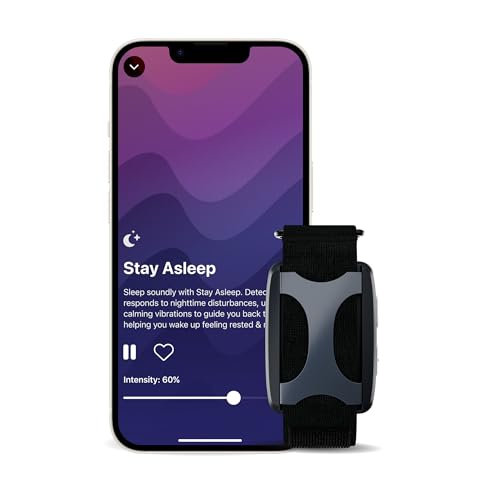
The Oura Ring and Whoop are the most accurate consumer options for sleep stages and HRV; a smartwatch (Apple Watch, Garmin) works too if you'd rather not wear a ring. Prioritize validated HRV and sleep-stage tracking over step counts, check whether it needs a subscription (Whoop does), and pick something comfortable enough to wear every night.

What Makes a Good Magnesium Supplement
Form matters more than dose: magnesium glycinate and citrate absorb well and are gentle on the stomach, while cheap magnesium oxide is poorly absorbed. A typical supplemental dose is 200–400 mg of elemental magnesium (check the label — it's usually lower than the pill weight). Take it in the evening if you're using it for sleep, and pick a third-party-tested brand.


Frequently Asked Questions
Can you have a normal sleep study and still have UARS?
Yes — this is the core diagnostic challenge. Home sleep tests and even some in-lab studies that don't score RERAs will show a normal AHI. UARS requires PSG with respiratory effort monitoring (esophageal manometry or high-quality nasal pressure transducer) and a sleep technologist trained to identify RERAs.
What is the difference between UARS and sleep apnea?
Both involve upper airway narrowing during sleep. In OSA, the airway fully or partially collapses, causing measurable apneas/hypopneas and oxygen desaturation. In UARS, the airway narrows enough to increase breathing effort and cause micro-arousals, but without frank apneas or significant oxygen drops. UARS patients tend to be younger, thinner, and more likely female.
Is UARS a real diagnosis?
Yes. UARS was first described in peer-reviewed literature by Dr. Guilleminault at Stanford in 1993 and has been extensively validated since. The AASM classifies it under the spectrum of sleep-disordered breathing. While some sleep physicians fold it into mild OSA diagnostically, the pathophysiology and patient demographics are distinct.
Is UARS rated for VA disability?
UARS may qualify for VA disability, but the VA does not have a diagnostic code specific to upper airway resistance syndrome. Because UARS falls on the sleep-disordered breathing spectrum, the VA generally evaluates it under the sleep apnea criteria in 38 CFR § 4.97, diagnostic code 6847. Eligibility and the rating level depend on a formal polysomnography-confirmed diagnosis, documented symptoms, and evidence connecting the condition to military service, so the VA decides each claim case by case. A veteran pursuing a claim should get an in-lab sleep study with respiratory-effort monitoring and work with a VA-accredited representative or their own physician to document the condition.
Topic updates
Get the weekly recovery roundup
Sleep, HRV, fatigue, burnout, cortisol rhythm, sleep apnea, overtraining, and stress physiology.
Want your sleep handled by a physician who works from your labs? See how Opt Health does it →
Check Where You Stand
Take our free health assessment to understand your metabolic, hormonal, and recovery risk factors — and get personalized recommendations.
Take the Free Assessment →Free · Takes 5 minutes · Instant results
Related Reading
-
Sleep Apnea, Fatigue, Weight Gain, and Metabolic Risk
Connect sleep apnea to fatigue, weight gain, testing, and treatment options.
-
Chronic Fatigue: Causes Beyond Just Sleep
Causes of persistent fatigue beyond sleep — iron, thyroid, inflammation.
-
Sleep Apnea Symptoms: Signs You're Not Breathing at Night
OSA warning signs: snoring, witnessed apneas, daytime sleepiness.
See more related reading
-
Sleep Apnea in Children
Pediatric sleep apnea symptoms by age, from infant breathing pauses to school-age hyperactivity.
-
Waking Up Tired Every Day? Here's Why
Why 7-8 hours isn't enough when sleep quality is poor.
-
Sleep Inertia: Why You Feel Groggy When You Wake Up
Morning grogginess — circadian, cortisol, and sleep-stage causes.
-
Afternoon Energy Crash: Causes and How to Prevent It
The 2-4 PM slump: blood sugar, cortisol, and circadian factors.
-
Chronic Fatigue Syndrome (ME/CFS): What We Know
ME/CFS: diagnostic criteria, current research, and management.
Affiliate disclosure: The Metabolic Journal is reader-supported. Some links above are affiliate or referral links and we may earn a commission at no extra cost to you. As an Amazon Associate we earn from qualifying purchases. Products are chosen on the merits; commissions never influence what we recommend. This is general information, not medical advice — talk to your clinician before acting.