Heart Rate Variability (HRV) by Age: Normal Ranges
Medically reviewed by Medical Advisory Board Last reviewed 2026-08-08
Normal HRV ranges by age and gender, what raises or lowers it, and how to interpret your score for recovery and stress
Heart rate variability (HRV) is the beat-to-beat variation in heart rhythm, reflecting autonomic nervous system balance. Higher HRV indicates better stress resilience, recovery capacity, and cardiovascular health. It's now accessible via consumer wearables.
Your heart doesn't beat like a metronome, and that's a good thing. The time between consecutive heartbeats (the R-R interval) varies, reflecting the dynamic interplay between your sympathetic ("fight or flight") and parasympathetic ("rest and digest") nervous systems. This variation is called heart rate variability (HRV).
Higher HRV indicates strong vagal tone and a nervous system that can respond flexibly to demands, ramping up when needed, then recovering quickly. Low HRV signals that the nervous system is stuck in a chronic stress response, with reduced adaptability and impaired recovery. A 2018 meta-analysis in the Journal of the American Heart Association confirmed that low HRV independently predicts cardiovascular events and all-cause mortality.
Partner · Opt Health
Want to know what your markers actually mean?
Opt Health publishes a guide to the 55+ biomarkers they test and what each one tells you — the same panel they run before building a treatment plan.
Read Opt Health's biomarker guide →Once limited to clinical research, HRV can now be measured daily through consumer wearables, including the Oura Ring, WHOOP, Apple Watch, and Garmin, using photoplethysmography (PPG) sensors. As a result, it has become the most accessible real-time biomarker for recovery and stress load.
HRV Metrics Explained
rMSSD (root mean square of successive differences): The most common metric used by wearables. Measures short-term (beat-to-beat) variability, primarily reflecting parasympathetic activity. Higher values = stronger vagal tone.
SDNN (standard deviation of NN intervals): Measures overall HRV over a time period (usually 24 hours). Reflects both sympathetic and parasympathetic input. Used in clinical research and Holter monitoring.
HRV Score (proprietary): Oura, WHOOP, and other platforms normalize rMSSD into a 0–100 or similar score for easier interpretation. These are useful for tracking personal trends but not directly comparable between platforms.
HRV Ranges by Age and Fitness (rMSSD)
| Age | Sedentary | Moderately Active | Very Fit / Athletic |
|---|---|---|---|
| 20–29 | 30–50 ms | 50–80 ms | 80–130 ms |
| 30–39 | 25–40 ms | 40–65 ms | 65–110 ms |
| 40–49 | 20–35 ms | 35–55 ms | 55–85 ms |
| 50–59 | 15–25 ms | 25–45 ms | 45–70 ms |
| 60+ | 10–20 ms | 20–35 ms | 35–55 ms |
Key principle: HRV is highly individual. A 45-year-old with rMSSD of 35 ms who has always been in that range is different from someone whose rMSSD dropped from 55 to 35 over 6 months. Personal trend analysis is far more valuable than population comparisons.
How to Measure HRV Accurately
Timing: Measure immediately upon waking, before getting out of bed. Morning HRV reflects overnight parasympathetic recovery and is most consistent and clinically meaningful.
Device placement: Chest straps (Polar H10) provide the most accurate R-R interval data. Wrist/finger PPG devices (Oura, Apple Watch) are slightly less precise but adequate for trend tracking.
Duration: Most wearables use a 5-minute or overnight measurement window. Consistency in measurement protocol matters more than duration.
Interpretation: Track 7-day and 30-day rolling averages. Day-to-day variation of 10–20% is normal. A sustained drop of >15% below your personal baseline over 3+ days warrants attention — it may indicate overtraining, illness onset, poor sleep, or elevated stress.
What Lowers and Raises HRV
Lowers HRV: Alcohol (even 1–2 drinks reduce HRV 15–30% next morning), poor sleep, chronic stress, overtraining, dehydration, acute illness, late-night eating (within 2 hours of bed), and inflammatory states.
Raises HRV: Consistent Zone 2 aerobic exercise (150+ min/week), quality sleep (7–9 hours), resonance frequency breathing (5.5 breaths/min, 10–20 min daily), cold exposure, meditation, adequate hydration, omega-3 supplementation (2–3g EPA+DHA), and social connection.


What Is HRV and How Is It Measured?
Heart rate variability (HRV) is the natural, beat-to-beat fluctuation in the time between each heartbeat, measured in milliseconds (ms) — it is not the same measurement as heart rate.
Heart rate (BPM) counts how many times your heart beats in a minute. HRV measures how much the time gap between those beats varies. Two people can share an identical heart rate of 60 BPM while having very different HRV: one heart beating with near-metronome regularity, the other with healthy, responsive variation. That's why wearables report HRV and heart rate as two separate numbers.
The standard short-term HRV metric is RMSSD (root mean square of successive differences), reported in milliseconds and calculated from the differences between consecutive heartbeat intervals. It's the metric most consumer wearables use because it's less sensitive to breathing rate and recording length than other options, according to a widely cited methods overview in Frontiers in Public Health. A higher RMSSD reflects more beat-to-beat variability and stronger parasympathetic (vagal) tone; a lower RMSSD reflects a more uniform rhythm and relatively more sympathetic drive.
Medical Conditions That Affect HRV
Several diagnosed medical conditions are associated with abnormal HRV patterns, including atrial fibrillation, POTS, and PTSD. HRV reflects autonomic nervous system activity, so conditions that disrupt that system often show up as unusual HRV readings — though HRV alone cannot diagnose any of them.
Atrial fibrillation (AFib): AFib is closely tied to autonomic imbalance. A 2022 study of hypertensive patients in Scientific Reports found that unusually high HRV — reflecting erratic autonomic fluctuation rather than healthy adaptability — was itself an independent predictor of later developing AFib. This is a reminder that more HRV is not automatically better in every clinical context.
POTS (postural orthostatic tachycardia syndrome): POTS involves dysfunction of the same autonomic system that HRV measures. A 2020 tilt-table study in Frontiers in Neuroscience found that parasympathetic tone drops more sharply in people with POTS than in people without it when moving from lying down to standing.
PTSD (post-traumatic stress disorder): A 2020 meta-analysis in Psychological Medicine found that people with PTSD consistently show lower RMSSD and reduced parasympathetic activity than people without PTSD, consistent with a nervous system stuck in heightened alert (source).
If you have one of these conditions, don't interpret your numbers against a general wellness chart — ask your doctor what your HRV pattern means in the context of your diagnosis.
Lifestyle Factors That Affect HRV
Daily habits can shift HRV within days, often before any other symptom appears. Alcohol, smoking, chronic stress, and jet lag are four of the most measurable examples.
Alcohol: Higher alcohol intake is associated with lower HRV in both time-domain and frequency-domain measures, according to a 2021 study in Medicina (Kaunas) that compared drinking patterns in healthy young adults. Heavy drinkers showed a measurably larger HRV drop than casual or binge drinkers.
Smoking cessation: Quitting smoking raises HRV. A study in the International Journal of Behavioral Medicine found that long-term male smokers who successfully quit showed significantly better HRV than those who relapsed, with the improvement traced mainly to stopping nicotine.
Chronic stress: Ongoing psychological stress keeps the sympathetic nervous system engaged, which lowers HRV over time. Structured HRV biofeedback training — slow-paced breathing while watching real-time HRV feedback — meaningfully reduces self-reported stress and anxiety, according to a widely cited review in Frontiers in Psychology.
Jet lag: Crossing time zones disrupts the normal daily rhythm of autonomic activity. In a study of travelers flying eastward from Tokyo to San Francisco, published in Biomedicine & Pharmacotherapy, the daily rhythm of parasympathetic (vagal) activity shifted out of its normal pattern after the flight, with the biggest disruption 5-6 days later — longer than most travelers expect jet lag to last (source).
Training load: Some strength and conditioning coaches use daily HRV trends to guide workout intensity, treating an above-baseline reading as a green light for harder training and a below-baseline reading as a cue to prioritize recovery. This approach was popularized by performance coach Joel Jamieson in his published guide to HRV-based training. It's a training-planning tool, not a medical assessment.
HRV During Pregnancy & the Menstrual Cycle
HRV shifts across the menstrual cycle and during pregnancy because reproductive hormones directly influence the autonomic nervous system.
Menstrual cycle: A narrative review in NeuroSci found that most available studies point to a decrease in vagally-mediated HRV from the follicular phase (before ovulation) to the luteal phase (after ovulation), though results vary across individual studies. If you have a menstrual cycle and your HRV chart shows a monthly wave, that pattern is expected and not necessarily a sign of poor recovery.
Pregnancy: HRV gradually decreases over a healthy pregnancy while resting heart rate rises, reflecting normal autonomic adaptation to the growing physiological demands of pregnancy, according to longitudinal tracking published in Frontiers in Physiology. These changes are typically small in healthy pregnancies and expected to resolve within a few months after delivery.
Not the same as fetal heart-rate monitoring: Wearable HRV is unrelated to fetal heart-rate tracing — the strip your obstetric team reviews during labor and delivery to monitor a baby's well-being. That is a distinct clinical procedure performed by trained medical staff, not something your personal wearable measures. This page covers adult wearable-based HRV only and does not address fetal monitoring.
HRV by Age and Gender: Normal Ranges
HRV declines with age in both men and women, and the size of the male-female gap itself changes as people get older, according to a study of 260 healthy volunteers spanning nine decades of life published in the Journal of the American College of Cardiology.
The age pattern: HRV falls steadily from young adulthood through the senior years in most people, healthy or not. This is a normal part of aging, driven by a gradual decline in parasympathetic responsiveness.
The sex pattern: In that study, healthy women under 30 had measurably lower short-term HRV (RMSSD and pNN50) than age-matched men. That gap narrowed and then disappeared by around age 30 for those short-term metrics. For longer-window metrics like SDNN, the male-female gap persisted until around age 50 — roughly the age of menopause — before converging.
Why we don't publish one master number per age and sex: Published normative studies use different devices, recording lengths, and populations, so their absolute numbers don't agree with each other or with the number your own wearable calculates. The pattern that holds up across studies is directional, not a fixed number: HRV goes down with age, and any sex-based gap seen in the 20s narrows over time. For your own health tracking, comparing today's reading to your own 30- or 90-day personal baseline is far more useful than comparing it to a population chart. A stable or improving personal trend matters more than beating an age-based average, and a persistent downward personal trend is worth discussing with your doctor regardless of how it compares to anyone else's number.
What to Look For in a Sleep & Recovery Tracker
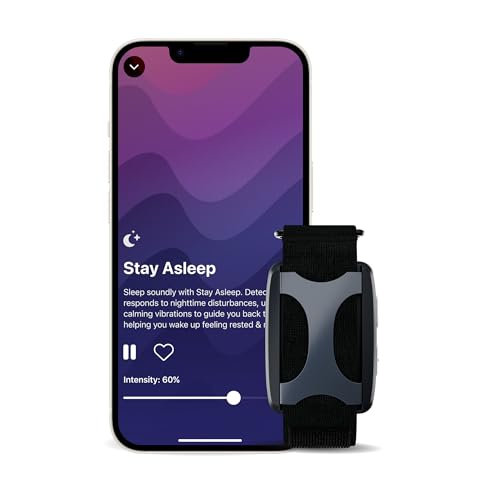
The Oura Ring and Whoop are the most accurate consumer options for sleep stages and HRV; a smartwatch (Apple Watch, Garmin) works too if you'd rather not wear a ring. Prioritize validated HRV and sleep-stage tracking over step counts, check whether it needs a subscription (Whoop does), and pick something comfortable enough to wear every night.

Frequently Asked Questions
What is a good HRV for my age?
HRV declines naturally with age. Population medians (rMSSD): 20s: 50–70 ms, 30s: 40–60 ms, 40s: 30–50 ms, 50s: 25–40 ms. However, your personal baseline and trend matter more than population averages. Fit individuals often maintain HRV 20–50% above age-matched peers. Focus on keeping your HRV stable or improving it over time.
What does it mean if my HRV is suddenly low?
A single low-HRV day is often from alcohol, poor sleep, or a hard workout the day before. A sustained drop over 3+ days suggests: overtraining, onset of illness (HRV often drops 24–48 hours before symptoms), chronic stress accumulation, or inadequate recovery. Reduce training intensity, prioritize sleep, and monitor for additional symptoms.
Is HRV better measured at night or in the morning?
Both are valid but measure different things. Overnight HRV (used by Oura and WHOOP) captures parasympathetic recovery during sleep. Morning HRV (upon waking, before standing) reflects your readiness for the day. The key is consistency — use the same measurement timing and device for trend comparison. Overnight measurements tend to have less variability.
Can you improve HRV?
Yes. The most effective interventions are: aerobic exercise (Zone 2 cardio increases rMSSD by 12–25% over 12 weeks), sleep optimization, resonance frequency breathing (5.5 breaths/min for 10–20 min daily), reducing alcohol, cold exposure, and omega-3 supplementation. Improvements are typically measurable within 4–8 weeks of consistent practice.
Is higher HRV always better?
No — HRV is a signal to interpret in context, not a score to maximize. Day-to-day fluctuation of 10-20% is normal and doesn't need action. A sudden spike isn't automatically good news either: in one study of hypertensive patients, unusually high HRV was itself an independent predictor of later developing atrial fibrillation, likely reflecting erratic autonomic fluctuation rather than healthy adaptability. For most healthy people, a stable or gradually improving personal trend over weeks matters far more than any single high or low reading, and your own baseline is a better reference point than comparing your number to someone else's.
Does higher HRV during sleep mean you slept well?
It's correlated, but not a direct 1:1 measure of sleep quality. Overnight HRV partly reflects how well your autonomic nervous system recovered while you slept, and factors that clearly hurt sleep — alcohol, a late heavy meal, high stress, illness onset — reliably show up as a lower overnight HRV reading, as the "What Lowers and Raises HRV" section above covers. But overnight HRV doesn't directly measure sleep architecture the way a clinical sleep study does — it can't tell you how much deep or REM sleep you got, or whether you have undiagnosed sleep apnea, on its own. Treat a low overnight HRV as a useful flag that something disrupted your recovery, and cross-check it against how you actually feel and your device's separate sleep-stage data, rather than as a standalone sleep-quality score.
Is heart rate variability the same as an irregular heartbeat or arrhythmia?
No — this is one of the most common points of confusion around the term. HRV describes healthy, expected beat-to-beat variation in timing at a normal, regular heart rhythm; it's a marker of autonomic nervous system balance, not a symptom. Arrhythmia (including atrial fibrillation, or AFib) describes an actual disturbance in your heart's rhythm — beats that are chaotic, skipped, or abnormally timed at the electrical level, which is a distinct medical finding, not simply "high variability." There is a related but different concept called respiratory sinus arrhythmia — the normal, healthy speeding and slowing of heart rate with each breath — which despite having "arrhythmia" in its name is a benign phenomenon closely tied to HRV, not a heart-rhythm disorder. If your wearable flags an actual irregular rhythm (as opposed to reporting your usual HRV number), that's a different, clinically relevant alert and worth discussing with a doctor rather than something this page's HRV ranges apply to.
Does menopause affect HRV?
The menopause transition is generally associated with a decline in HRV, though the pattern is less thoroughly mapped than the menstrual-cycle and pregnancy shifts covered above. The leading explanation is hormonal: estrogen has a modulating effect on the autonomic nervous system, and as estrogen declines through perimenopause and into menopause, that modulation weakens, which researchers link to reduced vagal (parasympathetic) tone. Vasomotor symptoms common in this transition — hot flashes and night sweats — can compound this by disrupting sleep, and poor sleep independently lowers HRV, as the "What Lowers and Raises HRV" section above covers. This is consistent with the broader age-related HRV decline this page already describes, layered with a hormonal component specific to the menopause transition. Individual variation is significant, and whether hormone therapy meaningfully changes this pattern isn't clearly established in the research. As with the rest of this page: a gradual shift over months during this life stage is expected context, not by itself a reason for concern — a sudden or sharp drop is still worth mentioning to your doctor.
Related Reading
Topic updates
Get the weekly lab marker roundup
Blood test interpretation, optimal ranges, fasting insulin, A1C, thyroid panels, testosterone, cortisol, and nutrient markers.
Want biomarkers handled by a physician who works from your labs? See how Opt Health does it →
Check Where You Stand
Take our free health assessment to understand your metabolic, hormonal, and recovery risk factors — and get personalized recommendations.
Take the Free Assessment →Free · Takes 5 minutes · Instant results
Affiliate disclosure: The Metabolic Journal is reader-supported. Some links above are affiliate or referral links and we may earn a commission at no extra cost to you. As an Amazon Associate we earn from qualifying purchases. Products are chosen on the merits; commissions never influence what we recommend. This is general information, not medical advice — talk to your clinician before acting.