Sleep Apnea Treatment in Children: What's Different
Medically reviewed by Medical Advisory Board Last reviewed 2026-07-08
Pediatric obstructive sleep apnea is usually treated differently than in adults — here's how
Pediatric obstructive sleep apnea has a different dominant cause and first-line treatment than the adult version — enlarged tonsils and adenoids are the most common driver, and surgery, not CPAP, is usually the first treatment considered. Here's how pediatric OSA differs and when to see a pediatric specialist.
This article is for informational purposes only and is not medical advice. Consult a pediatrician, pediatric ENT, or pediatric sleep specialist for diagnosis and treatment of a child. This page discusses children generally and is not a substitute for individualized pediatric care.
Our main sleep apnea treatment comparison focuses on adults, where CPAP is the first-line treatment for most cases. Pediatric obstructive sleep apnea (OSA) works differently enough — in cause, typical presentation, and standard treatment sequence — that it deserves separate coverage rather than an adult-focused page with a pediatric footnote.
Partner · Opt Health
Want help fixing your sleep for real?
Opt Health treats sleep as a measurable system — cortisol rhythm, thyroid, testosterone, inflammation — and works the biology behind bad sleep with a physician, not a sleep-hygiene checklist.
See Opt Health's sleep program →Why Pediatric OSA Is Usually a Different Problem Than Adult OSA
In adults, the leading drivers of obstructive sleep apnea are typically excess soft tissue around the airway (often related to body weight), airway anatomy, and muscle tone changes during sleep. In children, the single most common cause is different: enlarged tonsils and adenoids (adenotonsillar hypertrophy) physically narrowing the airway, frequently in children who are otherwise a healthy weight. Because the underlying driver is usually structural and often correctable, pediatric OSA treatment tends to start from a different first step than the adult playbook.
Presentation also differs. Instead of the loud snoring, witnessed pauses in breathing, and daytime sleepiness commonly reported in adults, children with OSA more often show up with snoring plus behavioral signs: hyperactivity, difficulty concentrating, irritability, bedwetting, or — somewhat counterintuitively — being mislabeled with attention or behavioral issues at school when poor sleep quality is actually the root cause. Growth concerns (poor weight gain) can also occur in more severe pediatric cases, the opposite pattern of the weight-gain association more commonly discussed in adult OSA.
First-Line Treatment: Tonsillectomy and Adenoidectomy
For children whose OSA is driven by enlarged tonsils and adenoids — the majority of pediatric cases — adenotonsillectomy (surgical removal of the tonsils and adenoids) is typically the first-line treatment, not a last resort as major surgery often is in the adult OSA algorithm. Studies of otherwise-healthy children with OSA and enlarged tonsils/adenoids have generally found high rates of symptom resolution after this surgery, which is why pediatric ENT guidelines commonly recommend it as the initial treatment rather than starting with CPAP the way adult treatment typically does. As with any surgery, it carries real risks and recovery considerations (pain, bleeding risk, and a recovery period of roughly one to two weeks) that a pediatric ENT will discuss individually.
Not every case resolves fully with surgery alone, particularly in children with obesity, craniofacial differences, underlying neuromuscular conditions, or severe OSA — these children are more likely to need additional evaluation and treatment afterward, sometimes including CPAP.
When CPAP Is Used in Children
CPAP is used in pediatric OSA, but usually in a narrower set of circumstances than in adults: when OSA persists after adenotonsillectomy, when a child isn't a surgical candidate, when enlarged tonsils/adenoids aren't the primary driver (for example, in children with obesity-related OSA, Down syndrome, or certain craniofacial or neuromuscular conditions), or while awaiting surgery in more severe cases. Pediatric CPAP requires mask fitting sized and designed for children, and successful long-term use typically depends heavily on caregiver involvement in building the habit, since young children generally can't manage nightly mask use independently the way most adults can.
When to See a Pediatric Specialist
Consider a pediatric evaluation (starting with your pediatrician, who may refer to a pediatric ENT or sleep specialist) if your child has habitual loud snoring, witnessed pauses in breathing or gasping during sleep, restless or sweaty sleep, mouth breathing, unexplained bedwetting past the typical age, or daytime behavioral changes like hyperactivity, irritability, or difficulty concentrating that don't have another obvious explanation. A sleep study (polysomnography), sometimes with pediatric-specific scoring criteria, is the diagnostic gold standard, though a physical exam showing significantly enlarged tonsils alongside a strong symptom history is sometimes enough to proceed directly toward a surgical referral, at the treating clinician's judgment. For how these warning signs look at each stage of childhood, from infant breathing pauses to school-age hyperactivity, see our breakdown of sleep apnea symptoms in children.
What to Look For in a Sleep & Recovery Tracker
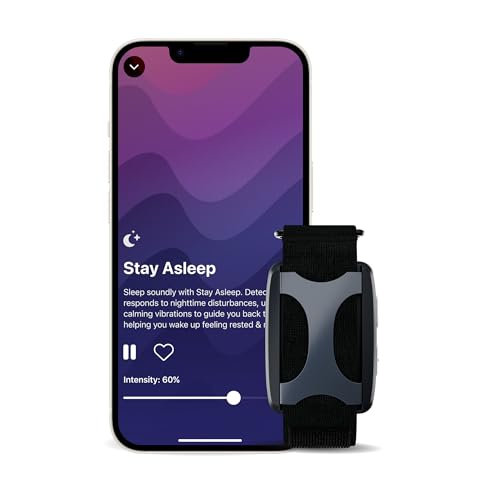
The Oura Ring and Whoop are the most accurate consumer options for sleep stages and HRV; a smartwatch (Apple Watch, Garmin) works too if you'd rather not wear a ring. Prioritize validated HRV and sleep-stage tracking over step counts, check whether it needs a subscription (Whoop does), and pick something comfortable enough to wear every night.

Frequently Asked Questions
What's the most common cause of sleep apnea in children?
Enlarged tonsils and adenoids (adenotonsillar hypertrophy) physically narrowing the airway are the most common cause of pediatric obstructive sleep apnea, which is different from the mix of factors (including body weight and airway anatomy) more commonly driving adult OSA.
Is CPAP the first treatment for sleep apnea in kids?
Usually not. For most children with OSA caused by enlarged tonsils and adenoids, adenotonsillectomy (surgical removal) is typically the first-line treatment. CPAP is generally reserved for cases where surgery isn't appropriate, OSA persists after surgery, or another underlying cause (like obesity or a craniofacial or neuromuscular condition) is the primary driver.
How do I know if my child has sleep apnea?
Watch for habitual loud snoring, pauses in breathing or gasping during sleep, restless sleep, mouth breathing, bedwetting past the typical age, or daytime behavioral changes (hyperactivity, irritability, trouble concentrating) that don't have another clear explanation. A pediatrician can evaluate and refer for a sleep study or pediatric ENT evaluation if warranted.
Can sleep apnea in children cause behavior or attention problems?
Yes — this is one of the more distinctive features of pediatric OSA compared to the adult version. Poor sleep quality from undiagnosed sleep apnea in children can present as hyperactivity, irritability, or difficulty concentrating, and is sometimes mistaken for a primary behavioral or attention condition before sleep apnea is identified as a contributing or root cause.
Topic updates
Get the weekly recovery roundup
Sleep, HRV, fatigue, burnout, cortisol rhythm, sleep apnea, overtraining, and stress physiology.
Want your sleep handled by a physician who works from your labs? See how Opt Health does it →
Check Where You Stand
Take our free health assessment to understand your metabolic, hormonal, and recovery risk factors — and get personalized recommendations.
Take the Free Assessment →Free · Takes 5 minutes · Instant results
Related Guides
-
Sleep Apnea in Children
Pediatric sleep apnea symptoms by age, from infant breathing pauses to school-age hyperactivity.
-
Inspire Sleep Apnea Treatment: How It Works, Cost, and Results
STAR trial results, candidacy criteria, cost, and Medicare coverage.
-
Central Sleep Apnea: Causes, Symptoms, and Treatment Options
CNS vs airway mechanism, ASV vs CPAP, and causes including heart failure.
See more related guides
-
Sleep Apnea VA Disability: How Claims Generally Work for Veterans
How sleep apnea VA disability claims generally work for veterans — education only, not legal advice.
-
Sleep Apnea Nexus Letter: What the Medical Opinion Has to Contain
Sleep apnea nexus letter: what the medical opinion has to contain, who can write it, and the secondary-connection routes.
-
Sleep Apnea, Fatigue, Weight Gain, and Metabolic Risk
Connect sleep apnea to fatigue, weight gain, testing, and treatment options.
-
Sleep Apnea Symptoms: Signs You're Not Breathing at Night
OSA warning signs: snoring, witnessed apneas, daytime sleepiness.
-
Sleep Apnea Treatment Options Compared
CPAP, oral appliances, positional therapy, surgery — compared.
Affiliate disclosure: The Metabolic Journal is reader-supported. Some links above are affiliate or referral links and we may earn a commission at no extra cost to you. As an Amazon Associate we earn from qualifying purchases. Products are chosen on the merits; commissions never influence what we recommend. This is general information, not medical advice — talk to your clinician before acting.