Prediabetes Risk Test
A score of 5 or more on the CDC prediabetes risk test indicates high risk for prediabetes. This free prediabetes risk test scores seven health factors in your browser, though only a blood test can determine a medical diagnosis.
How the CDC Risk Test Is Scored
The CDC prediabetes risk test calculates your risk score across seven health factors, where 5 or more points indicate high risk for prediabetes.
For example, consider a 52-year-old man with no family history of diabetes and no high blood pressure diagnosis who is inactive. At 5 feet 10 inches and 200 pounds, his body mass index is 28.7 from the formula: 703 multiplied by 200 divided by 70 squared. He receives 2 points for age, 1 point for sex, 0 for family history, 0 for blood pressure, 1 for inactivity, and 1 for weight. His total reaches 5 points. This score meets the high-risk cutoff defined by the Centers for Disease Control and Prevention (CDC).
| Question | Points |
|---|---|
| Age | Under 40: 0; 40 to 49: 1; 50 to 59: 2; 60 or older: 3 |
| Sex | Man: 1; Woman: 0 |
| Gestational diabetes history | Yes: 1; No: 0 |
| Family history of diabetes (mother, father, sister, or brother) | Yes: 1; No: 0 |
| High blood pressure diagnosis | Yes: 1; No: 0 |
| Physical activity | Active: 0; Inactive: 1 |
| Body mass index (BMI) | Under 25 (under 23 if Asian American): 0; 25 to 29 (23 to 29 if Asian American): 1; 30 to 39: 2; 40 or more: 3 |
The screening tool evaluates seven inputs: age, sex, family history, blood pressure history, physical activity, height, and weight. The gestational diabetes question appears only when you pick Woman. Height and weight accept imperial or metric values. Selecting the Asian American box lowers the body mass index cutoff from 25 to 23. Calculations run in your browser, and nothing is stored unless you use the optional email box.
Why Each Question Counts
The CDC result sheet says the American Diabetes Association launched its first risk test in 1993. The questionnaire was adapted from a study by Bang and colleagues in the 2009 Annals of Internal Medicine and validated with CDC data. Researchers included only traits people know about themselves, such as age, height, and weight, omitting blood glucose or cholesterol levels.
The CDC notes that risk increases around age 45 and rises sharply after age 65. More men than women have undiagnosed diabetes, possibly because men are less likely to see their doctor regularly. Gestational diabetes resolves after childbirth but raises subsequent risk for type 2 diabetes. The CDC says a family link exists partly because family members sometimes share habits. High blood pressure also elevates diabetes risk. Being inactive is a known risk factor, and one reason the CDC gives is that the body cannot use insulin as well without regular physical activity.
The CDC identifies higher risk among African Americans, Hispanic or Latino Americans, American Indians, Asian Americans, and Pacific Islanders. The test adjusts only for Asian American BMI, because Asian Americans face increased risk at lower weights.
What to Do With Your Score
A high score on the screening test indicates elevated risk. It does not provide a medical diagnosis. The calculator shows your score out of 10, displays points for each answer, and flags whether you reach 5. A score below 5 falls below the high-risk cutoff, though the screen cannot rule out prediabetes.
The CDC result sheet states that a score of 5 or higher means you are likely to have prediabetes and face high risk for type 2 diabetes. The CDC recommends sharing your score with your doctor, because only a blood test can determine a diagnosis.
According to the CDC, a normal hemoglobin A1C is below 5.7%. An A1C of 5.7% to 6.4% indicates prediabetes, while 6.5% or above indicates diabetes. For fasting blood sugar measured after an overnight fast, 99 mg/dL or below is normal, 100 to 125 mg/dL indicates prediabetes, and 126 mg/dL or above indicates diabetes.
The guide on prediabetes symptoms details warning signs and testing criteria. The A1C calculator translates A1C percentages into estimated average glucose. The fasting glucose guide explains fasting glucose. If your score reaches 5 or higher on this prediabetes risk test, share your results with your doctor to request a diagnostic blood test.
What You'll Get
- CDC Prediabetes Risk Test score out of 10 with points per answer
- Whether the score reaches the CDC high-risk cutoff of 5
- BMI used for the weight points
How to test metabolic markers at home
You don't need a lab appointment to check your own metabolic markers — a few at-home kits mail you a collection kit and return physician-reviewed results online within days:
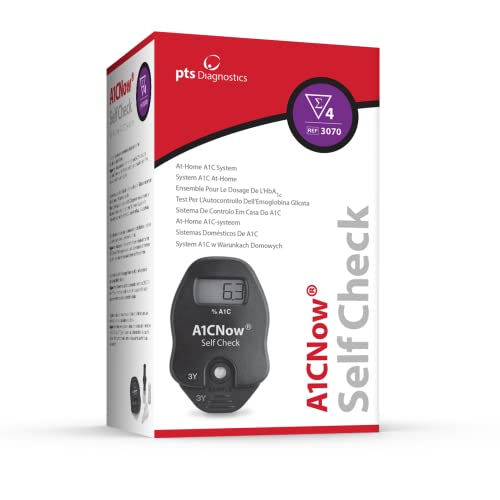
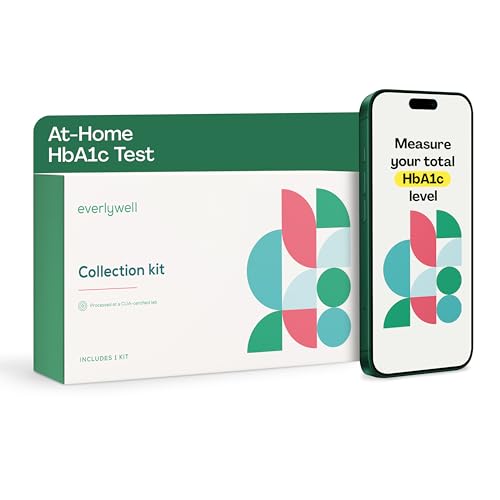
Prefer to order direct? The Everlywell HbA1c Test uses a CLIA-certified lab, physician-reviewed results, and prepaid return shipping.
Frequently Asked Questions
What is the prediabetes risk test?
The prediabetes risk test is a seven-question screening tool adapted from a 2009 study by Bang and colleagues and validated with CDC data. It evaluates self-reported factors: age, sex, family history of diabetes, high blood pressure, physical activity, and body mass index. The test tallies points out of 10, and only a blood test can determine a diagnosis.
What score means high risk for prediabetes?
A score of 5 points or higher out of 10 indicates high risk for prediabetes. The CDC states that people scoring 5 or more are likely to have prediabetes, though only a doctor can confirm a diagnosis using a blood test.
Am I pre-diabetic if I score 5 or more?
A score of 5 or higher does not diagnose prediabetes. The CDC explains that while a score of 5 or more means you are likely to have prediabetes, only a doctor can diagnose it through laboratory blood testing.
How is prediabetes diagnosed?
Prediabetes is diagnosed through clinical blood tests. According to the CDC, an A1C of 5.7% to 6.4% indicates prediabetes. An overnight fasting blood glucose level between 100 and 125 mg/dL also indicates prediabetes.
Why does the test use a lower BMI for Asian Americans?
The test uses a body mass index cutoff of 23 for Asian Americans instead of 25. The CDC notes that Asian Americans face increased risk for type 2 diabetes at lower body weights.
Can a low score rule out prediabetes?
A score below 5 cannot rule out prediabetes. The test is a screen, and only a blood test can determine a diagnosis.
Topic updates
Get the weekly metabolic health roundup
Insulin resistance, blood sugar, visceral fat, GLP-1 plateaus, metabolic syndrome, and weight-loss physiology.
Affiliate disclosure: Some links above are affiliate or referral links and we may earn a commission at no extra cost to you. As an Amazon Associate we earn from qualifying purchases. This is general information and is not medical advice. Talk to your clinician before acting.