Wearable Sleep Tracking Points to Individual Sleep Baselines
A study of 462 adults found that relative sleep shortfalls tracked health outcomes more closely than a standard six-hour cutoff.
Moving Beyond Fixed Six-Hour Sleep Cutoffs
A yearlong study shows that measuring sleep loss relative to an individual baseline tracks physical and mental markers better than a fixed six-hour cutoff. Researchers from the Centre for Sleep and Cognition at the National University of Singapore (NUS) published the findings in the journal Sleep Medicine. The team followed 462 working adults wearing Oura Rings and completing daily smartphone assessments for up to twelve months.
Conventional public health guidance typically defines insufficient sleep as anything under six hours per night. The NUS team introduced a personalized short sleep (pSS) framework to examine whether a night was notably shorter than what that specific participant usually obtained. Across the study cohort, the personalized threshold averaged 6.1 hours, which produced similar overall volume estimates to the standard cutoff but flagged different nights and different individuals.
How Researchers Calculated Individual Sleep Thresholds
The personalized sleep cutoff was calculated as one hour below the seventy-fifth percentile of each participant's total recorded sleep distribution. The seventy-fifth percentile captured sleep duration achieved when occupational and social demands were reduced. The one-hour deduction drew on prior experimental research showing measurable functional impairment after an hour of sleep restriction.
This calculation accounted for baseline differences between individuals. A person who naturally sleeps seven and a half hours experiences a deficit when sleeping six hours, even though six hours meets conventional standards. Conversely, a habitual short sleeper who functions normally on less time might repeatedly breach a six-hour threshold without experiencing an acute personal deficit. The pSS framework identifies when sleep deviates from a person's demonstrated capacity.
Stronger Links to Daily Function and Cardiovascular Markers
Personalized sleep deficits showed stronger associations with daily performance and vascular health indicators than the standard six-hour definition. When participants slept below their personal baseline, they reported lower alertness, reduced motivation, less sleep satisfaction, and higher rates of stress or sadness. These shortfalls also correlated with elevations in sleeping heart rate, reductions in heart-rate variability, and lower daytime physical activity.
Long-term vascular metrics also aligned more closely with accumulated personalized shortfalls. A higher percentage of nights below an individual's personal threshold showed stronger statistical links to increased body roundness index and higher systolic blood pressure. The study also documented associations with pulse-wave velocity and arterial stiffness, suggesting that repeated departures from individual sleep baselines relate to vascular strain.
Isolated Sleep Shortfalls Compared to Consecutive Nights
Most recorded episodes of personalized short sleep occurred as single, isolated nights rather than multi-day streaks. For 86.4% of study participants, the median run of personalized sleep shortfall lasted exactly one night. Extended consecutive runs became progressively less frequent across the observation period.
The negative effects on physical activity, mood, and resting heart rate expanded when participants experienced successive nights below baseline. This pattern suggests that real-world recovery differs from laboratory sleep deprivation protocols, which often enforce multiple consecutive short nights. While occasional short nights were routine, sustained deficits produced the clearest cumulative burdens.
Framework Boundaries and Clinical Context
The personalized short sleep calculation reflects observed behavioral patterns rather than direct biological sleep requirements. As the study authors noted, habitual sleep duration results from an interaction of biological need, social opportunity, environmental constraints, and sleep ability. Observing an individual's routine sleep distribution does not confirm that their typical duration is medically optimal.
Readers tracking sleep through commercial wearables should interpret baseline deviations as signals of disruption rather than diagnoses. Sleep needs vary across individuals, and wearable metrics are best discussed with a physician when assessing persistent fatigue, blood pressure elevations, or metabolic concerns. The NUS data highlight that evaluating recovery against personal patterns provides clearer context than comparing sleep to generic population targets.
What to Look For in a Sleep & Recovery Tracker
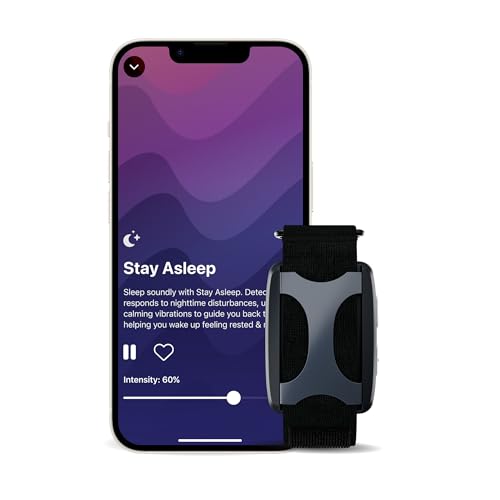
The Oura Ring and Whoop are the most accurate consumer options for sleep stages and HRV; a smartwatch (Apple Watch, Garmin) works too if you'd rather not wear a ring. Prioritize validated HRV and sleep-stage tracking over step counts, check whether it needs a subscription (Whoop does), and pick something comfortable enough to wear every night.

What Makes a Good Magnesium Supplement
Form matters more than dose: magnesium glycinate and citrate absorb well and are gentle on the stomach, while cheap magnesium oxide is poorly absorbed. A typical supplemental dose is 200–400 mg of elemental magnesium (check the label — it's usually lower than the pill weight). Take it in the evening if you're using it for sleep, and pick a third-party-tested brand.


Related Articles
Gut Microbiome and Sleep Improvement After Hydrogen Intake
A Hiroshima University trial evaluated gut bacteria and sleep changes after hydrogen...
Read article RecoveryEvening Smartphone Use Delays Teen Sleep by Over an Hour
Teens who use smartphones past 10 p.m. fall asleep 64 minutes later and lose 20 minutes of total...
Read article RecoveryUniversity of Sydney Identifies Circadian Depression Subtype
A University of Sydney study identified a circadian depression subtype in 25 percent of...
Read article RecoveryMedical Cannabis Lacks Evidence for Insomnia in New Cochrane Review
A Cochrane systematic review of nine clinical trials found insufficient evidence to determine if...
Read articleWant help fixing your sleep for real?
Opt Health treats sleep as a measurable system — cortisol rhythm, thyroid, testosterone, inflammation — and works the biology behind bad sleep with a physician, not a sleep-hygiene checklist.
See Opt Health's sleep program →Topic updates
Get the weekly recovery roundup
Sleep, HRV, fatigue, burnout, cortisol rhythm, sleep apnea, overtraining, and stress physiology.
Understand Your Health Better
Our free assessment maps your symptoms to the most relevant guides, tools, and product recommendations.
Take the Free Assessment →Free · Takes 5 minutes · Instant results
Affiliate disclosure: The Metabolic Journal is reader-supported. Some links above are affiliate or referral links and we may earn a commission at no extra cost to you. Products are chosen on the merits; commissions never influence what we recommend. This is general information, not medical advice — talk to your clinician before acting.