Wearable Sensor Measures Arm Impairment During Stroke Recovery
Researchers at UMass Amherst designed a wrist sensor that tracks upper-limb impairment continuously instead of relying on periodic clinical exams.
Continuous Wrist Sensing Tracks Arm Impairment After Stroke
A wearable wrist device uses machine learning to track post-stroke arm movement impairment during everyday activities. The technology measures how motor severity changes throughout the rehabilitation process rather than relying on brief visual tests.
Researchers at University of Massachusetts Amherst developed the sensor in partnership with Washington University in St. Louis, Shirley Ryan AbilityLab, and Harvard Medical School/Mass General Brigham. The findings appeared in Science Translational Medicine.
Standard In-Clinic Motor Exams Create Monitoring Gaps
More than 795,000 Americans experience a stroke each year, and upper-limb mobility limitations affect up to 77% of patients immediately afterward. About 40% of those individuals continue to manage chronic arm deficits that impair independent daily living.
Physical therapists typically evaluate arm motor function through manual observation sessions that last roughly 30 minutes. Because these manual evaluations require substantial clinical time, clinicians generally schedule them only before and after a completed course of rehabilitation.
This infrequent schedule leaves patients and physical therapists without objective data on how movement severity responds to specific therapy exercises between sessions.
Machine Learning Separates Movement Volume From Impairment Severity
The wrist sensor houses an accelerometer to record arm motion as individuals carry out standard routines at home. An algorithm interprets the data to separate raw movement volume from underlying motor impairment severity.
Patients can deliberately move an impaired arm more often throughout the day without changing their underlying motor impairment score. The machine learning model accounts for that difference by estimating clinical severity scores directly from continuous motion patterns.
The development team trained the algorithm on motion data and clinical ratings from healthy volunteers and patients in the subacute stage of stroke recovery. The study defined the subacute phase as one week to six months following a stroke.
Trial Results Show Improved Estimation Accuracy and Smaller Sample Needs
The study authors reported that their digital biomarker was 40% to 50% more accurate at reflecting true clinical condition than intermittent visual assessments alone. The sensor gathers data across full days instead of capturing a single performance window inside a clinic.
Continuous monitoring also reduced the cohort sizes needed to evaluate post-stroke interventions in clinical trials. When the authors re-evaluated data from a past stroke trial using the sensor model, they reached statistically significant results with 50% fewer study participants.
Therapists could use continuous impairment data to modify home exercise prescriptions before a multi-week rehabilitation block ends.
Development Status and Clinical Limitations of the Wearable Sensor
The device remains an investigational tool and is not currently distributed for home medical use. Patients recovering from a stroke cannot purchase the monitor over the counter or request it from standard outpatient clinics today.
The algorithm was trained on patients within one week to six months of a stroke. The published data do not demonstrate whether the same model accurately rates arm severity in individuals living with chronic stroke impairments past the six-month window.
Patients undergoing stroke rehabilitation should discuss their current exercise routines and functional progress with their neurologist or physical therapist.
What to Look For in a Sleep & Recovery Tracker
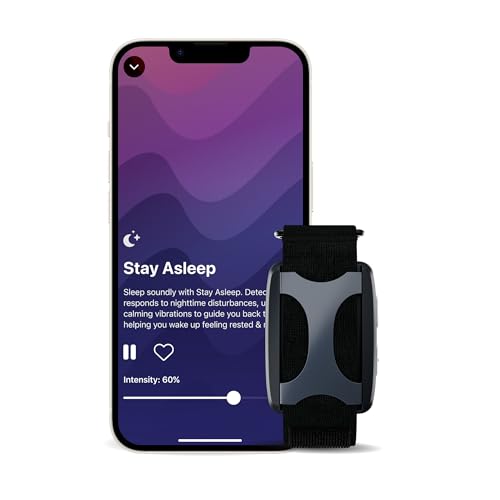
The Oura Ring and Whoop are the most accurate consumer options for sleep stages and HRV; a smartwatch (Apple Watch, Garmin) works too if you'd rather not wear a ring. Prioritize validated HRV and sleep-stage tracking over step counts, check whether it needs a subscription (Whoop does), and pick something comfortable enough to wear every night.

What Makes a Good Magnesium Supplement
Form matters more than dose: magnesium glycinate and citrate absorb well and are gentle on the stomach, while cheap magnesium oxide is poorly absorbed. A typical supplemental dose is 200–400 mg of elemental magnesium (check the label — it's usually lower than the pill weight). Take it in the evening if you're using it for sleep, and pick a third-party-tested brand.


Related Articles
Johns Hopkins Team Tests AI Sleep Patch to Amplify Slow-Wave Rest
Johns Hopkins researchers developed an adhesive forehead patch that monitors brain activity to...
Read article RecoveryCannabinol in Sleep Aids Shows Signs of Physical Dependence in Mice
Preclinical research shows cannabinol, a cannabinoid sold in over-the-counter sleep supplements,...
Read article RecoveryLonger Sleep Duration Linked to Kidney Disease in Type 2 Diabetes
Japanese researchers tracked 678 adults with type 2 diabetes and found longer habitual sleep...
Read article RecoveryLong-Term Concussion Symptoms Tied to Sleep and Mental Health
A Curtin University study found 45.6 percent of adults experienced long-term concussion symptoms...
Read articlePartner · Opt Health
Want help fixing your sleep for real?
Opt Health treats sleep as a measurable system — cortisol rhythm, thyroid, testosterone, inflammation — and works the biology behind bad sleep with a physician, not a sleep-hygiene checklist.
See Opt Health's sleep program →Topic updates
Get the weekly recovery roundup
Sleep, HRV, fatigue, burnout, cortisol rhythm, sleep apnea, overtraining, and stress physiology.
Understand Your Health Better
Our free assessment maps your symptoms to the most relevant guides, tools, and product recommendations.
Take the Free Assessment →Free · Takes 5 minutes · Instant results
Affiliate disclosure: The Metabolic Journal is reader-supported. Some links above are affiliate or referral links and we may earn a commission at no extra cost to you. Products are chosen on the merits; commissions never influence what we recommend. This is general information, not medical advice — talk to your clinician before acting.