Johns Hopkins Team Tests AI Sleep Patch to Amplify Slow-Wave Rest
Researchers paired forehead sensors with timed audio and cooling controls to extend deep sleep in preliminary testing.
Forehead Sensors Track Sleep Stages Without Full Lab Equipment
A wearable adhesive patch developed at the Johns Hopkins Applied Physics Laboratory measures real-time brain activity from the forehead to automate sleep staging. Traditional polysomnography requires scalp electrodes and manual scoring by technicians, a method established in the 1950s that reaches roughly 85 percent scoring accuracy. The prototype device replaces that clinic-based hardware with a single forehead strip that starts recording at the press of a button.
Sleep scientist William Coon trained an artificial intelligence (AI) model on more than 11,000 overnight recordings from the National Sleep Research Resource to interpret the incoming signals. The underlying architecture operates similarly to large language models (LLMs), processing continuous neural activity instead of text sequences. In laboratory evaluations, the automated classification matched the accuracy of trained human scorers.
Acoustic Clicks and Mattress Cooling Act as Interventions
The experimental patch uses closed-loop interventions to increase slow-wave sleep rather than merely logging nocturnal data. Deep sleep manifests as large neural waves that arrive in intermittent bursts during the night. When the device detects these slow-wave patterns, it delivers quiet auditory clicks timed precisely to coax the brain into generating additional slow waves.
Because acoustic stimulation only amplifies existing slow waves, the research team paired sound with thermal regulation to assist older adults who naturally produce fewer deep-sleep cycles. Coon integrated the patch with a cooling mattress system that activates based on real-time sleep onset instead of a static clock timer. Lowering skin temperature at the exact onset of sleep helps guide the brain into deeper stages faster and maintain them longer.
Slow-Wave Sleep Supports Cellular Clearing and Neurological Health
Deep sleep plays a direct role in systemic recovery, tissue repair, and brain maintenance. Slow-wave sleep steadily diminishes as adults age, a pattern linked to higher risks of cognitive decline. During deep rest, the brain flushes metabolic waste products, including the misfolded proteins associated with Alzheimer's disease.
Nightly sleep recordings also allow the research team's computational models to estimate biological brain age. That derived metric correlates with broader physical health markers almost as closely as structural magnetic resonance imaging (MRI) scans. Managing sleep quality through objective measurement addresses an accessible lifestyle variable in metabolic and neurological resilience.
- Slow-wave sleep declines naturally across the normal human aging process.
- The brain removes accumulated protein waste primarily during deep sleep stages.
- Neural sleep recordings can estimate biological brain age without neuroimaging equipment.
Early Pilot Data Leaves Practical Consumer Questions Unanswered
The reported improvements in slow-wave sleep stem from early pilot testing rather than completed, large-scale clinical trials. The prototype demonstrates that combining auditory stimulation with thermal cooling produces a larger increase in slow-wave sleep than either tool alone. However, the Johns Hopkins team has not yet published data regarding long-term clinical outcomes across diverse patient populations.
The technology also requires access to compatible hardware, including specialized mattress cooling systems, to execute its multi-step protocol. Individuals managing sleep disruption or metabolic issues should consult a primary care clinician or sleep specialist rather than relying on unreleased experimental hardware. Commercial availability, durability, skin irritation rates, and independent validation across chronic insomnia cohorts remain unconfirmed.
What to Look For in a Sleep & Recovery Tracker
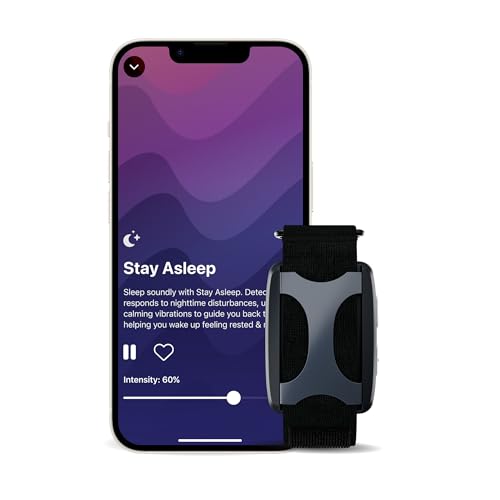
The Oura Ring and Whoop are the most accurate consumer options for sleep stages and HRV; a smartwatch (Apple Watch, Garmin) works too if you'd rather not wear a ring. Prioritize validated HRV and sleep-stage tracking over step counts, check whether it needs a subscription (Whoop does), and pick something comfortable enough to wear every night.

What Makes a Good Magnesium Supplement
Form matters more than dose: magnesium glycinate and citrate absorb well and are gentle on the stomach, while cheap magnesium oxide is poorly absorbed. A typical supplemental dose is 200–400 mg of elemental magnesium (check the label — it's usually lower than the pill weight). Take it in the evening if you're using it for sleep, and pick a third-party-tested brand.


Related Articles
Evening Smartphone Use Delays Teen Sleep by Over an Hour
Teens who use smartphones past 10 p.m. fall asleep 64 minutes later and lose 20 minutes of total...
Read article RecoveryUniversity of Sydney Identifies Circadian Depression Subtype
A University of Sydney study identified a circadian depression subtype in 25 percent of...
Read article RecoveryMedical Cannabis Lacks Evidence for Insomnia in New Cochrane Review
A Cochrane systematic review of nine clinical trials found insufficient evidence to determine if...
Read article RecoveryPre-Surgery Physical Activity Linked to Lower Delirium Risk
A study presented at ANESTHESIOLOGY 2026 links weekly physical activity before tumor removal...
Read articleWant help fixing your sleep for real?
Opt Health treats sleep as a measurable system — cortisol rhythm, thyroid, testosterone, inflammation — and works the biology behind bad sleep with a physician, not a sleep-hygiene checklist.
See Opt Health's sleep program →Topic updates
Get the weekly recovery roundup
Sleep, HRV, fatigue, burnout, cortisol rhythm, sleep apnea, overtraining, and stress physiology.
Understand Your Health Better
Our free assessment maps your symptoms to the most relevant guides, tools, and product recommendations.
Take the Free Assessment →Free · Takes 5 minutes · Instant results
Affiliate disclosure: The Metabolic Journal is reader-supported. Some links above are affiliate or referral links and we may earn a commission at no extra cost to you. Products are chosen on the merits; commissions never influence what we recommend. This is general information, not medical advice — talk to your clinician before acting.