Cannabis Use Linked to Reduced Sleep Quality in Long-Term Study
Objective sleep monitors recorded higher disruption among cannabis users even when individuals felt well rested.
Objective Disruption Recorded Over Thirty-Five Years
A long-running Northwestern Medicine study published in JAMA Network Open found that long-term and recent cannabis use were associated with poorer objectively measured sleep quality. Researchers analyzed data from 1,266 Black and white adults enrolled in the Coronary Artery Risk Development in Young Adults (CARDIA) study. Investigators tracked participants from young adulthood into middle age over roughly 35 years before measuring their sleep.
In middle age, participants wore a wrist-based sleep monitor for one week and completed concurrent sleep surveys. The wearable devices recorded lower sleep efficiency and higher nighttime disruption in participants with greater lifetime cannabis exposure. These associations persisted after researchers adjusted for age, sex, race, cigarette smoking, alcohol intake, physical activity, depression, chronic conditions, and other substance use.
The Disconnect Between Perception and Device Data
Participants who used cannabis did not report worse sleep on subjective questionnaires, despite device readings showing elevated nighttime wakefulness. The wrist monitor tracked measurable sleep fragmentation that participants did not identify on their daily logs. Corresponding author Dr. Thanh-Huyen T. Vu noted that cannabis-related sleep disturbances appear to go unnoticed by the users themselves.
Senior author Mercedes R. Carnethon stated that the study data do not support the common public belief that cannabis functions effectively as a sleep aid. People who perceive that cannabis helps them rest may simply fail to notice frequent nighttime awakenings. This gap between perceived sedation and actual sleep quality highlights the difference between falling asleep and sustaining uninterrupted rest.
Specific Sleep Measurements Affected by Cannabis
Wearable monitors recorded three distinct markers of disrupted sleep among participants with higher cumulative cannabis use. These individuals spent a lower percentage of the night asleep, experienced more fragmented sleep, and stayed awake longer after initially nodding off.
Recent users showed similar patterns of low sleep efficiency and extended periods of wakefulness throughout the night. Recent cannabis users were also significantly more likely to sleep longer than eight hours per night compared to participants who never used cannabis. Longer time in bed did not compensate for the documented fragmentation during the night.
- Lower overall sleep efficiency across the monitoring week
- Higher rates of sleep fragmentation during the night
- More time spent awake after initial sleep onset
- Increased likelihood of sleeping longer than eight hours nightly
Implications for Nighttime Metabolic Recovery
Uninterrupted sleep supports nighttime metabolic processes, including glucose regulation and tissue repair. Frequent brief awakenings can alter normal sleep architecture even if an individual does not recall waking up in the morning. When nighttime wakefulness increases, biological recovery intervals become interrupted.
People managing blood sugar or daytime fatigue often look to sleep aids to improve recovery numbers. Individuals currently using cannabis products for sleep should talk to their clinician about comprehensive sleep evaluations rather than assuming subjective drowsiness matches restorative physiological sleep.
Study Design Caveats and Unanswered Questions
The CARDIA study was observational and was not designed to prove that cannabis directly causes sleep fragmentation. The data establish an association between exposure and disrupted sleep, but cannot rule out unmeasured behavioral factors. Long-term observational research cannot establish direct physiological causality.
The researchers also did not differentiate between consumption methods such as inhaled smoke versus ingested edibles. Because participants were monitored over several decades starting in 1985, individual patterns, potency levels, and modes of cannabis use likely shifted over time. Future clinical studies will need to test specific administration routes and cannabinoid concentrations under controlled laboratory conditions.
What to Look For in a Sleep & Recovery Tracker
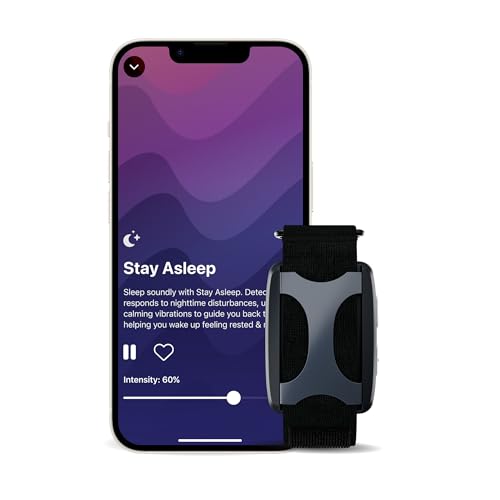
The Oura Ring and Whoop are the most accurate consumer options for sleep stages and HRV; a smartwatch (Apple Watch, Garmin) works too if you'd rather not wear a ring. Prioritize validated HRV and sleep-stage tracking over step counts, check whether it needs a subscription (Whoop does), and pick something comfortable enough to wear every night.

What Makes a Good Magnesium Supplement
Form matters more than dose: magnesium glycinate and citrate absorb well and are gentle on the stomach, while cheap magnesium oxide is poorly absorbed. A typical supplemental dose is 200–400 mg of elemental magnesium (check the label — it's usually lower than the pill weight). Take it in the evening if you're using it for sleep, and pick a third-party-tested brand.


Related Articles
Evening Smartphone Use Delays Teen Sleep by Over an Hour
Teens who use smartphones past 10 p.m. fall asleep 64 minutes later and lose 20 minutes of total...
Read article RecoveryUniversity of Sydney Identifies Circadian Depression Subtype
A University of Sydney study identified a circadian depression subtype in 25 percent of...
Read article RecoveryMedical Cannabis Lacks Evidence for Insomnia in New Cochrane Review
A Cochrane systematic review of nine clinical trials found insufficient evidence to determine if...
Read article RecoveryPre-Surgery Physical Activity Linked to Lower Delirium Risk
A study presented at ANESTHESIOLOGY 2026 links weekly physical activity before tumor removal...
Read articleWant help fixing your sleep for real?
Opt Health treats sleep as a measurable system — cortisol rhythm, thyroid, testosterone, inflammation — and works the biology behind bad sleep with a physician, not a sleep-hygiene checklist.
See Opt Health's sleep program →Topic updates
Get the weekly recovery roundup
Sleep, HRV, fatigue, burnout, cortisol rhythm, sleep apnea, overtraining, and stress physiology.
Understand Your Health Better
Our free assessment maps your symptoms to the most relevant guides, tools, and product recommendations.
Take the Free Assessment →Free · Takes 5 minutes · Instant results
Affiliate disclosure: The Metabolic Journal is reader-supported. Some links above are affiliate or referral links and we may earn a commission at no extra cost to you. Products are chosen on the merits; commissions never influence what we recommend. This is general information, not medical advice — talk to your clinician before acting.